Plan your spring backlog in winter: a guide for New England contractors
Use the slow winter months to revisit old leads, call past clients, estimate early and line up spring start dates before the New England rush begins.
By AGT Work Crew Team
By mid-January, the phone goes quiet in a lot of New England contractor offices. Exterior work is on hold, a couple of interior jobs keep the crew busy, and the owner finally has time to think. Then March arrives, the snow slides off the roofs, and everyone calls at once. The contractors who start spring with a full calendar didn't get lucky in March. They did the work in January.
Winter is the best time of year to build your backlog, because it's the only time you're not too busy to do it.
Why spring backlogs are built in winter
Homeowners plan spring projects during the winter. They notice the drafty windows in January, the ice dams in February, the peeling clapboards when the light changes in March. The ones who already talked to a contractor before the thaw get on the calendar first. The rest wait.
A backlog also changes how you run the season. With jobs lined up, you can order materials early, plan the crew's weeks and turn down work that doesn't fit, instead of saying yes to everything out of worry.
1. Go back through last year's leads
Every contractor has a pile of leads that went nowhere: the homeowner who wanted a deck "next year," the estimate that was "too much right now," the call you never returned because you were slammed in July. Next year is now.
- List every open or stalled lead from the past year, wherever it lives: notebook, inbox, texts.
- Note why each one stalled: timing, budget, they chose someone else, or you never followed up.
- Start with the timing ones. "Not this year" is the easiest lead to revive in winter.
2. Learn from the jobs you lost
Lost opportunities are information. When you look at why you lost them, patterns show up quickly: too slow to send the estimate, a price that doesn't fit a certain kind of job, a lead source that never turns into work.
Ask yourself a few honest questions:
- Which kinds of jobs did you win most often? Go after more of those.
- Where did your best leads come from? Referrals, a neighbor who saw the truck, a past client. Spend your winter effort there.
- Which lost jobs were close? A polite check-in can bring some of them back, especially if the other contractor never showed up.
3. Call past clients, and think about their properties
Your past clients already trust you. They're also the people most likely to have another project. A short winter call or email works better than you'd expect: "We did your kitchen two years ago. Anything on the list for spring?"
Think in terms of properties, not just people. A client in Arlington might also own a two-family in Medford or a summer place on the Cape. The porch you noticed was soft, the roof that looked tired, the basement they talked about finishing: those are next year's jobs, and you're the contractor who already knows the house.
Keep the message personal and specific. A note that mentions their house and the work you did together reads like a conversation, not a sales pitch.
4. Estimate early and line up start dates
A homeowner who has an estimate in February can plan, budget and decide before the rush. Visit while you have time, write a clear estimate and propose a realistic start window.
- Offer specific start weeks, not "sometime in spring." Clients commit more easily to a date.
- Sequence the work by weather. Interior jobs and basements first; roofing, siding and decks once the ground thaws and the temperatures cooperate.
- Leave a buffer. New England springs are unpredictable, and a rainy April can push exterior work back by weeks.
Once a client says yes, put the job on the calendar right away. A verbal "let's do it in April" without a date tends to drift into June.
5. Keep your pipeline visible
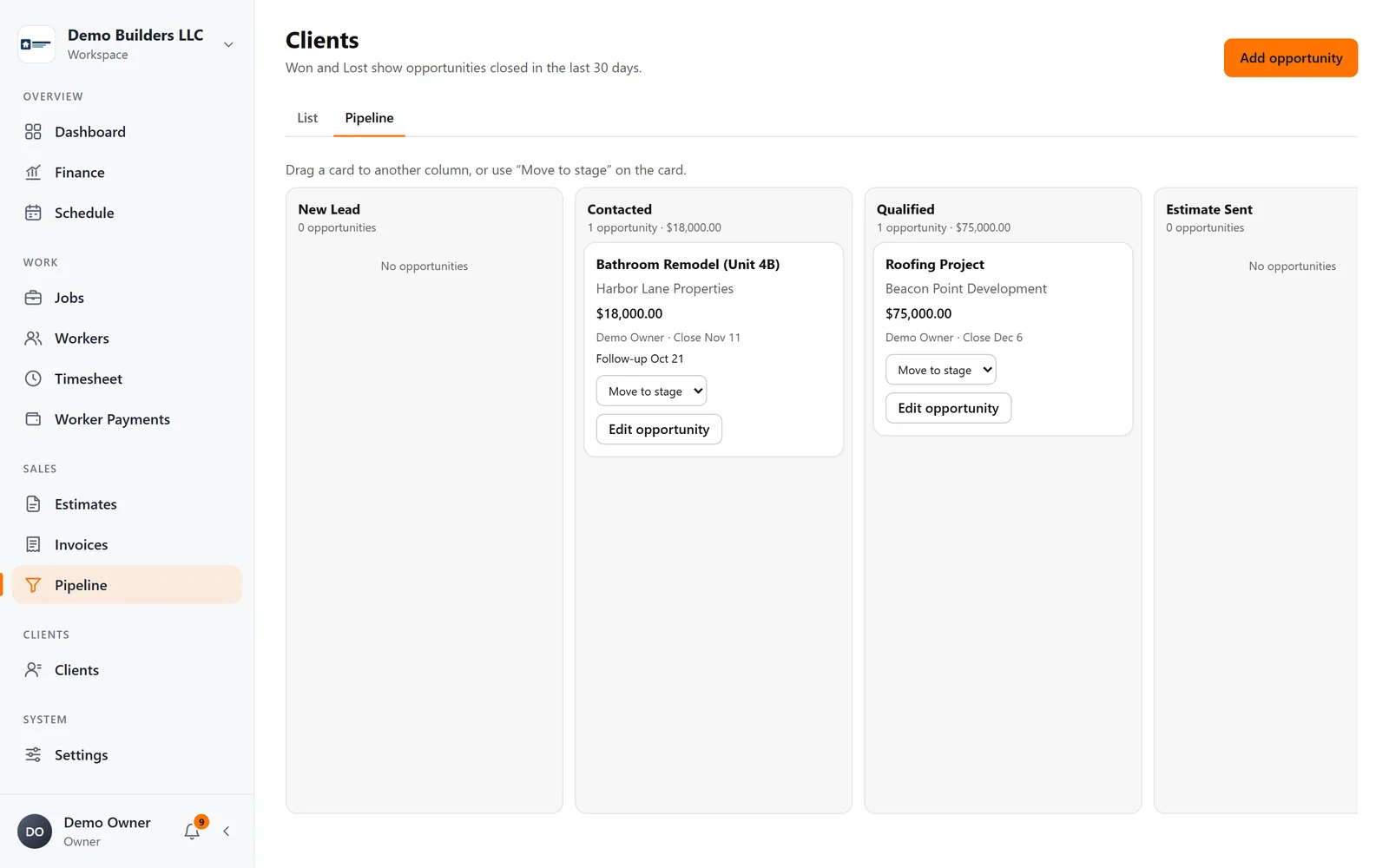
All of this falls apart if the information stays in your head. You need one place where you can see every opportunity and where it stands: new lead, site visit, estimate sent, won, lost.
A visible pipeline answers the questions that matter in winter: how much work is likely for spring, which estimates need a follow-up this week, and where the gaps in the calendar are. Review it once a week, on the same day, and keep it honest: move dead leads to lost, with the reason, so next winter's review is even more useful.
A full spring calendar is usually a list of winter phone calls that someone actually made.
How AGT Work Crew helps
AGT Work Crew keeps your clients, properties and opportunities in one place, so winter prospecting doesn't depend on memory.
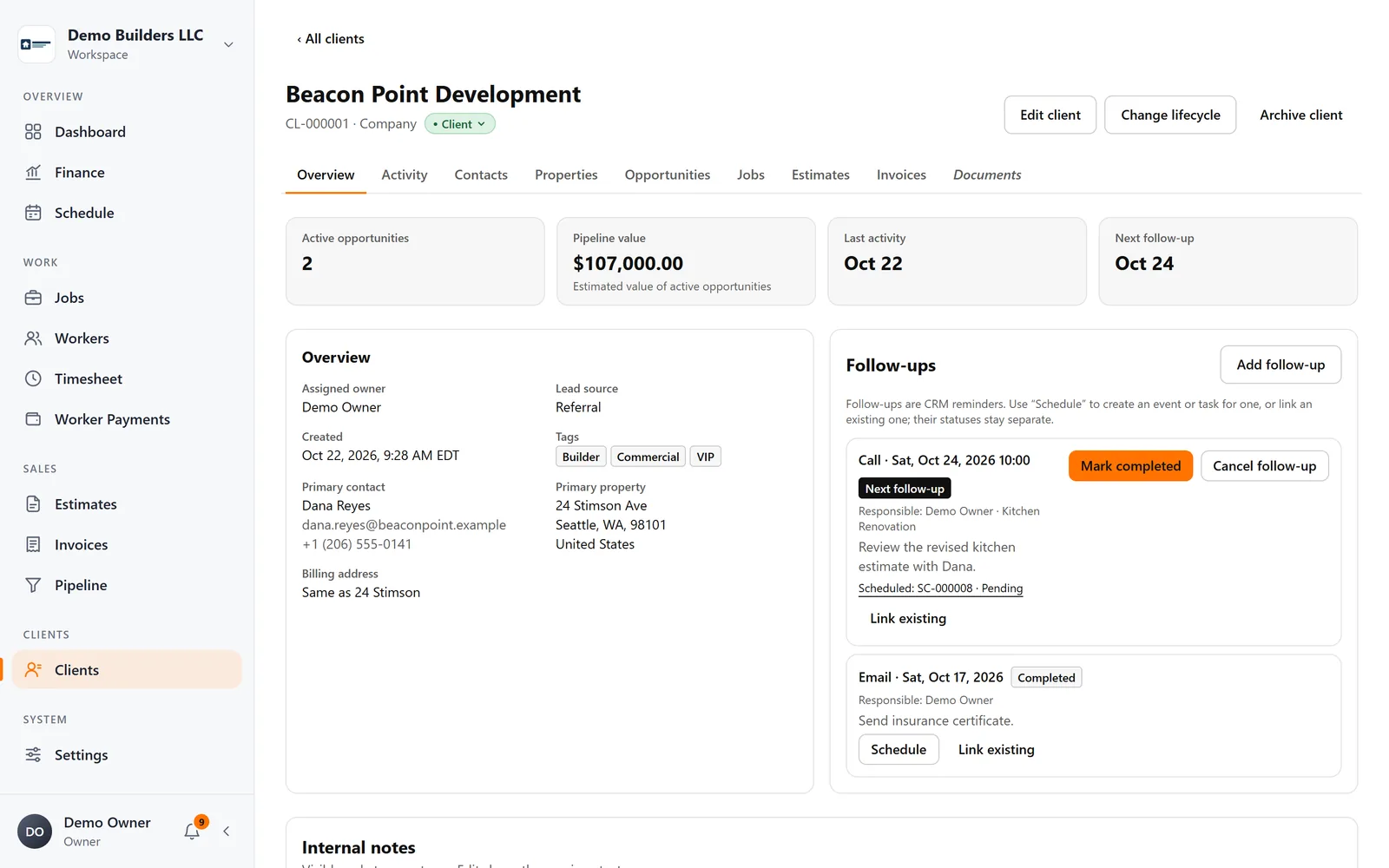
- Clients with several contacts and multiple properties, so you know every house a client owns and what you've done there.
- An opportunities board with drag and drop, with lead sources and lost reasons recorded, so you can see what's working.
- Tags, notes, follow-ups and a timeline of estimates, jobs and activity for each client.
- Import your existing client list from a CSV file to get started quickly.
- When a job is booked, add it to the schedule, linked to the client, property or job, and assign the crew.
The slow season is when next season gets built. See clients and pipeline in AGT Work Crew.