Follow up on construction leads before another contractor gets the job
Respond the same day, track every lead with a next step and a date, and learn from lead sources and lost reasons so good jobs stop slipping away.
By AGT Work Crew Team
A homeowner in Arlington calls on a Monday about a kitchen in a 1920s colonial. You're on a roof in Medford, so you tell them you'll call back tonight. Tonight turns into Thursday. When you finally reach them, they've already had two contractors walk through the house, and one of them sent a number yesterday. The job wasn't lost on price. It was lost in your voicemail.
Most small contractors don't have a lead problem. They have a follow-up problem. The calls come in, from referrals, the truck sign, a neighbor who watched you redo a porch, and then they scatter across texts, emails, sticky notes and the back of a supply-house receipt.
Respond while the lead is still warm
The first contractor to have a real conversation with a homeowner has an advantage that's hard to beat. People who reach out about a project are usually ready to talk right then. Two days later, they've moved on to the next name on the list.
You can't stop work every time the phone rings, but you can set a simple standard:
- Same day, every time. Even a two-line text ("Got your message about the kitchen, I'll call you tonight after 6") tells the homeowner they reached a real business.
- Ask the basic questions early. What's the project, where's the property, when do they want it done, and how did they hear about you.
- Book the site visit on the first call if the job looks like a fit. A date on the calendar is worth more than "let's talk next week".
- Say no quickly when it isn't your kind of work. A polite referral to someone else is better than a lead you'll never call back.
Track every lead in one place
If your leads live in five different places, some of them will be forgotten. Not because you don't care, but because nobody can hold twenty open conversations in their head during a busy fall.
Pick one place and put every lead there, even the small ones. For each lead, write down:
- Who they are: a name, a phone number, an email, and whether it's a homeowner or a company like a property manager.
- The property: the address, and anything you noticed. Old plaster, knob-and-tube, a tight driveway in Somerville.
- What they want: one sentence about the project.
- Where they came from: referral, website, sign, repeat client.
- The next step and its date: "Site visit Tuesday 8 a.m." or "Send estimate by Friday".
That last line matters most. A lead without a next step and a date is a lead you're slowly losing.
Give every lead a next step and a date
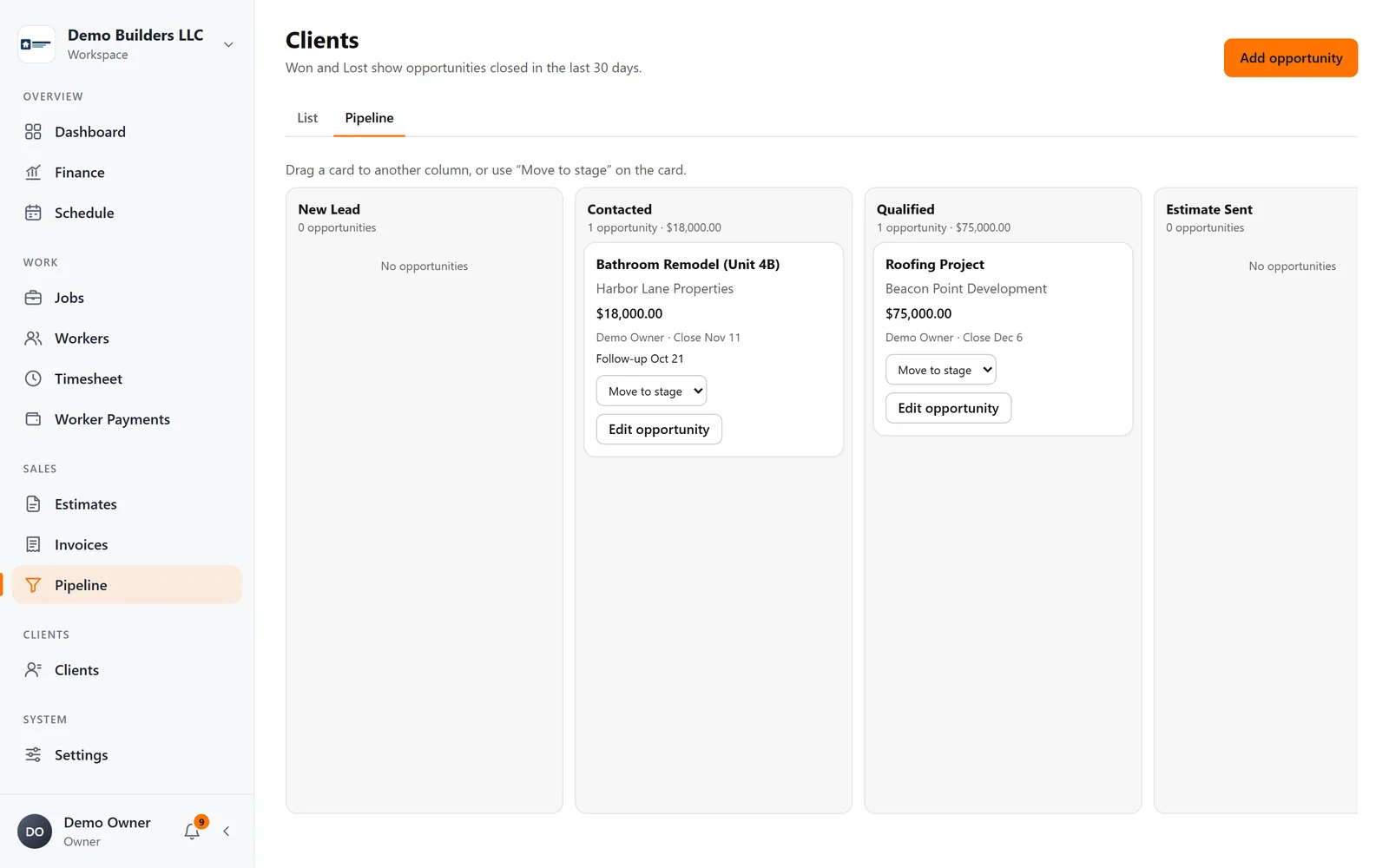
Think of each lead as moving through a few simple stages: new, site visit booked, estimate sent, won or lost. The stage tells you where it is. The next step tells you what you owe the client.
Once a week, maybe Monday morning before the crew rolls out, go through every open lead and ask one question: what's the next thing I need to do, and when? If the answer is "nothing, I'm waiting on them", put a date on when you'll check in anyway. Waiting without a date is how good jobs go quiet.
Find a follow-up rhythm that doesn't feel pushy
Many contractors stop after one call because they don't want to bother anyone. But homeowners are busy too, and a lot of silence is just a full week, not a "no". A steady rhythm keeps you in the conversation without pressure:
- After the site visit: a short thank-you and a clear date for when the estimate will arrive.
- A few days after the estimate: ask if they had a chance to look at it and if anything needs explaining.
- About a week later: offer to walk through the numbers on the phone, or adjust the scope if the budget is the issue.
- After that: a last friendly check-in. If the project is on hold until spring, note the month and follow up then.
Every follow-up should be useful to the client: an answer, an option, a date. "Just checking in" is fine once. After that, bring something new.
New England helps here. A homeowner who isn't ready in November may be very ready in March, when the snow is melting and everyone wants their deck or siding done by summer. A dated note in the lead record means you're the one who calls first.
Know where your work comes from, and why you lose it
Two pieces of information turn your lead list into something you can learn from.
Lead sources. When you record how each lead found you, patterns show up after a few months. Maybe referrals from past clients in Newton turn into jobs far more often than website inquiries. That tells you where to spend your time: a thank-you to past clients, a yard sign on every finished job.
Lost reasons. When a deal doesn't happen, write down why, in a word or two: price, timing, went with someone else, project cancelled, no response. If "no response" keeps showing up, your follow-up needs work. If "price" keeps showing up on one type of job, look at how you're pricing it, or at whether it's really your kind of work.
How AGT Work Crew helps
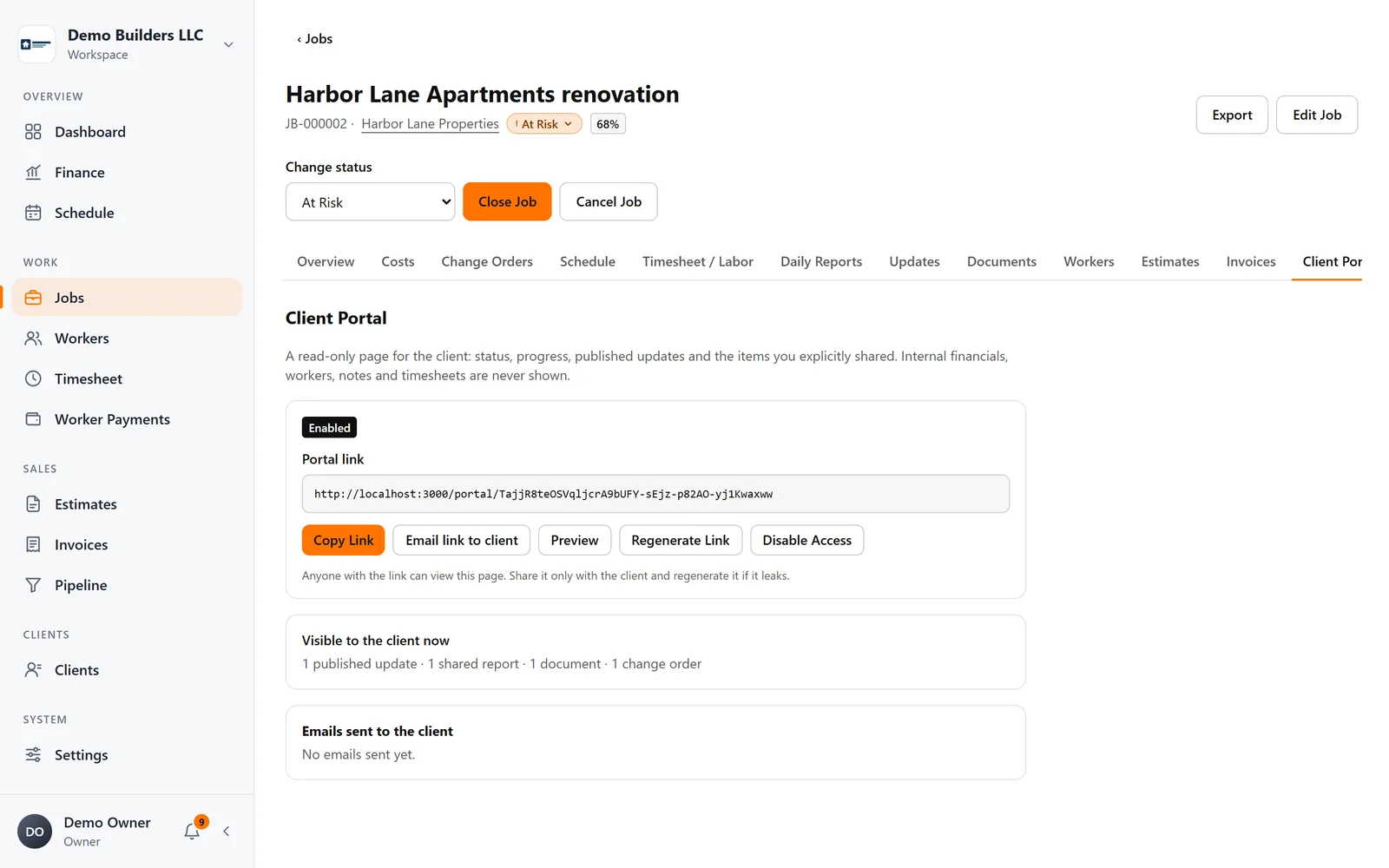
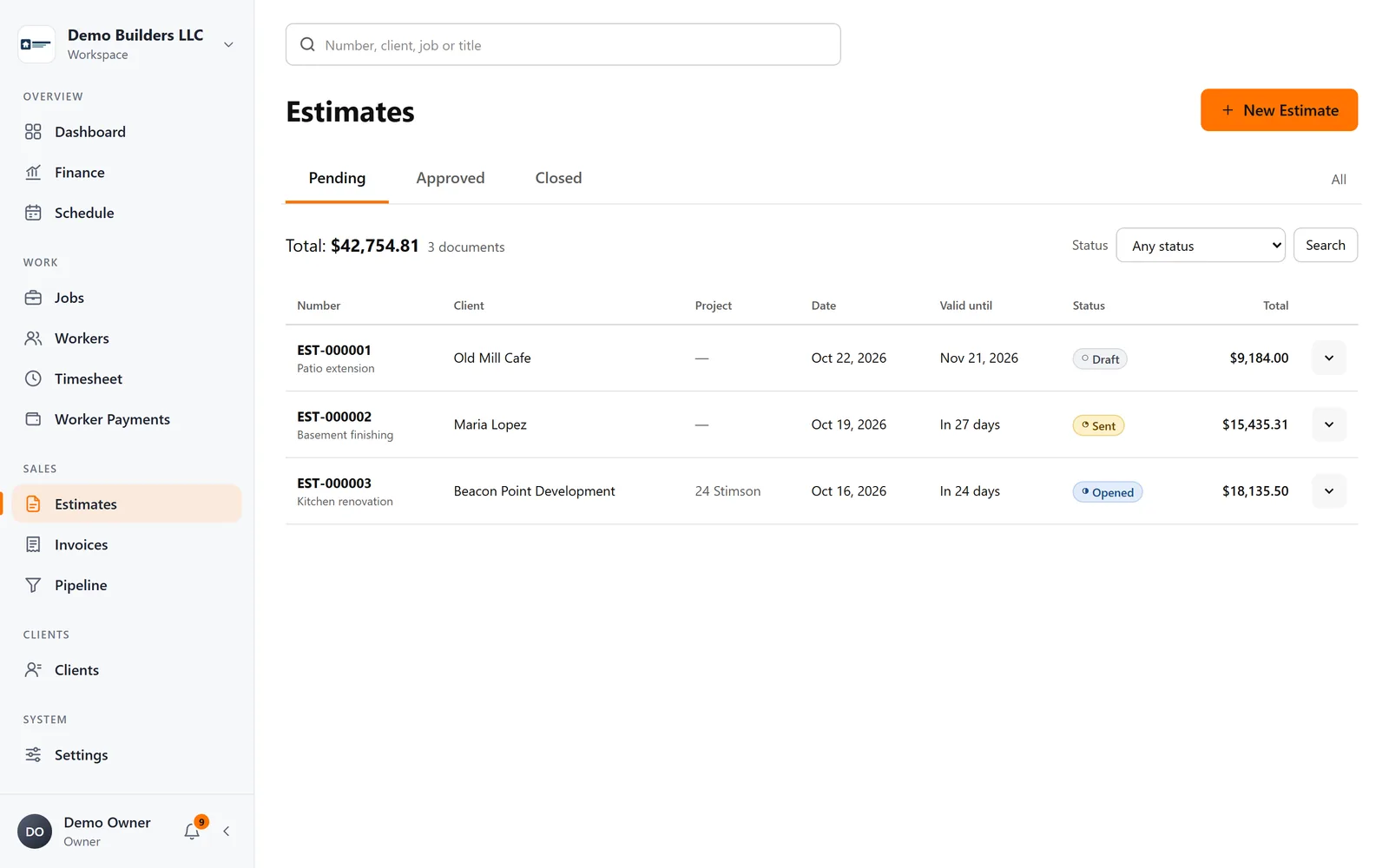
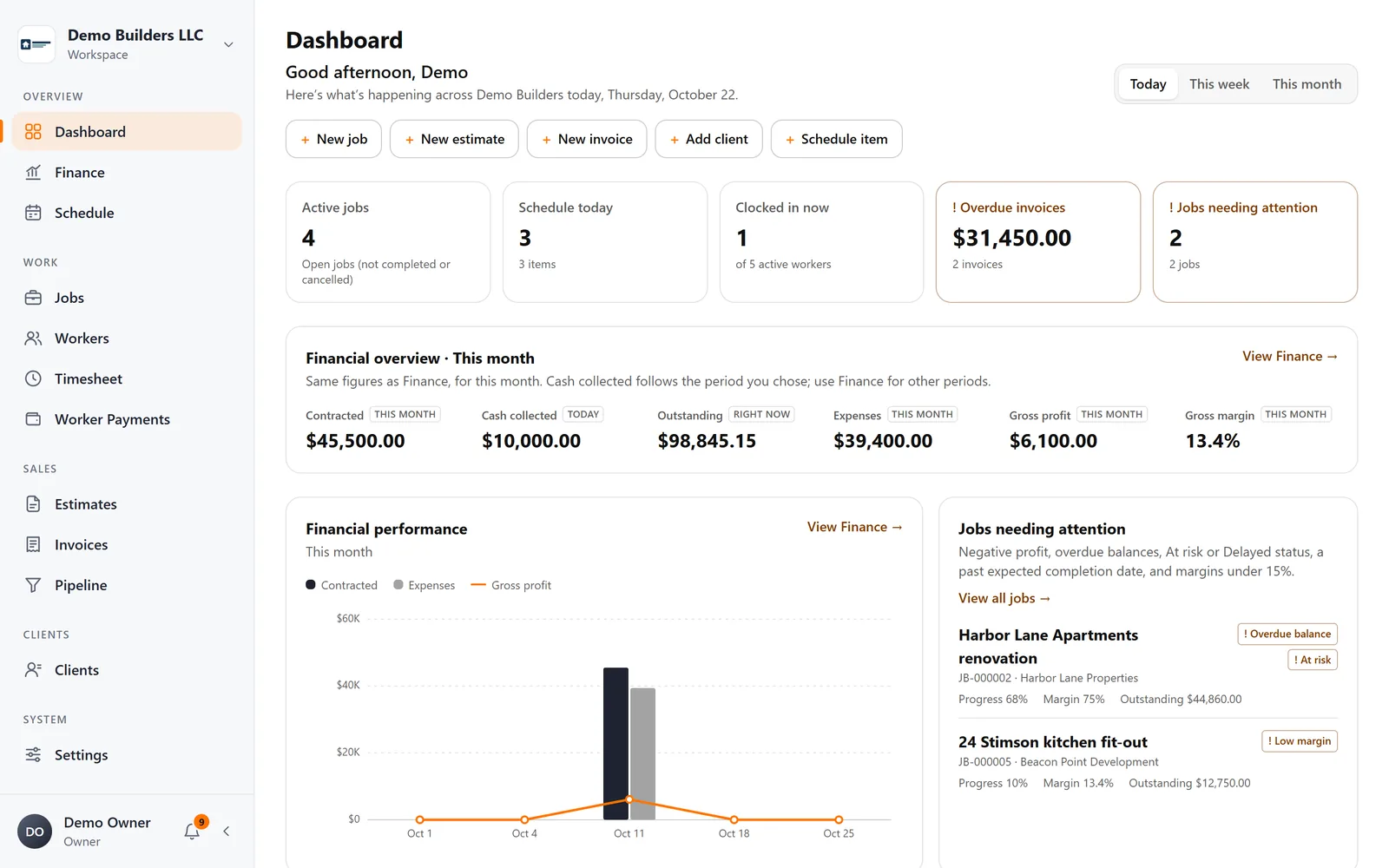
AGT Work Crew keeps your clients and leads in one place, so the Arlington kitchen doesn't end up in your voicemail.
- Client records for individuals and companies, with several contacts and multiple properties each.
- An opportunities board where you drag each deal across stages, so you can see every open lead at a glance.
- Lead sources and lost reasons recorded on each opportunity.
- Tags, notes with history and scheduled follow-ups, plus a timeline of estimates, jobs and activity on every client.
- Duplicate warnings for email and phone, so the same homeowner doesn't end up in your list twice.
- CSV import to bring in the client list you already have.
A fast first reply, one list for every lead and a next step with a date will win you jobs you're losing today. See clients and pipeline in AGT Work Crew.