A new worker's first day: what to have ready before they show up
Who they report to, the job address, hours and breaks, how to report problems: a simple first-day and first-week plan for new crew members.
By AGT Work Crew Team
It's 6:50 a.m. on a Monday. Your new carpenter is parked on the wrong street in Newton because the address he got was the office, not the job. When he finds the house, the lead is on a ladder, nobody knows he's coming, and he spends the first hour carrying debris because no one has time to explain anything else. By Friday he's wondering whether he made the right choice.
Most small companies don't lose new people because the work is too hard. They lose them because the first days feel improvised. A good first day costs you almost nothing, as long as you plan it the week before.
Why first days go wrong
The same few gaps show up again and again:
- Nobody owns the new person. The owner hired them, the lead didn't know, and everyone assumes someone else will explain things.
- Basic information arrives by word of mouth. The address, the start time, where to park, what to bring. Each one is a phone call or a text that may or may not happen.
- The rules are unwritten. How hours are recorded, when breaks happen, who to call when something is wrong. Long-time workers just know. The new person has to guess.
- No one checks in. Small problems on day two become reasons to leave on day ten.
Before day one: what to have ready
Make a short list and go through it before the new worker shows up. It takes fifteen minutes.
- Who they report to. One name and one phone number. Not "whoever's there."
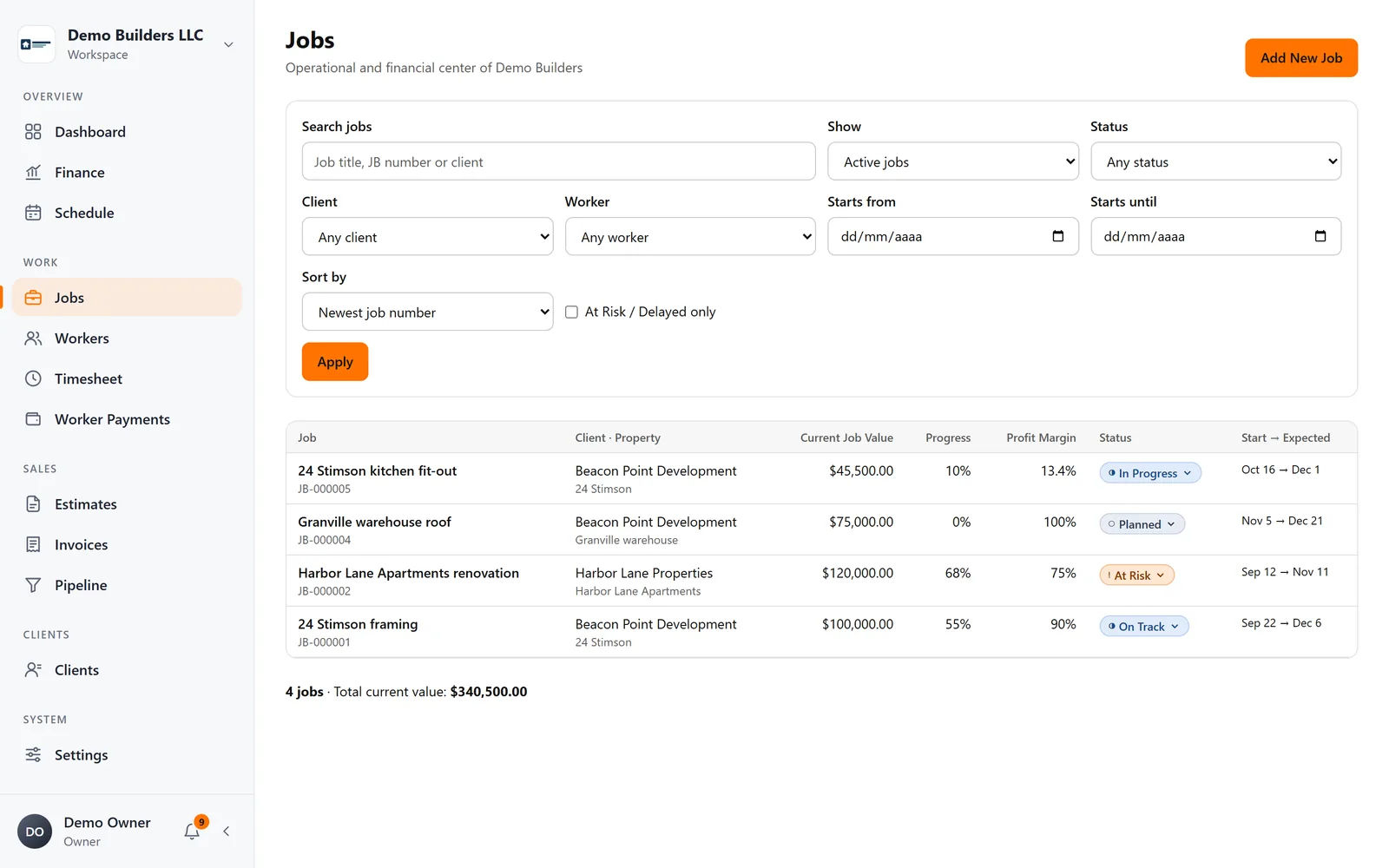
- The job address and the start time. The actual site, with parking notes. In Somerville or Brookline, "park on the street" isn't an answer; say where.
- The schedule for the first week. Even a rough one. Knowing where they'll be on Wednesday makes a new person feel expected, not tolerated.
- What to bring. Their own tools, boots, lunch, anything the job needs. Tell them what you supply so they don't buy it twice.
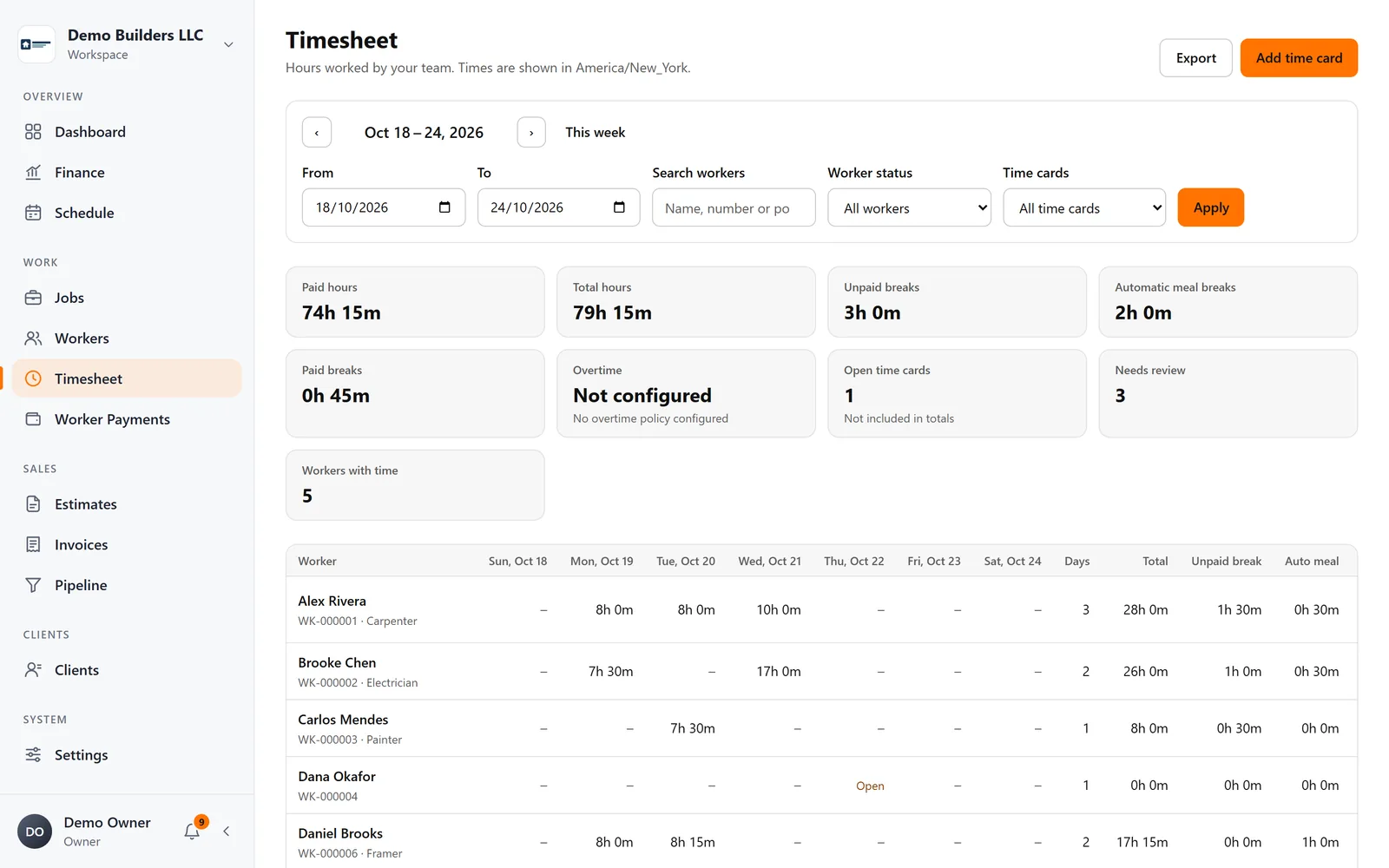
- How hours and breaks work. How they record start and end times, when lunch usually happens, and who approves the hours. Clear expectations here prevent most pay disputes later.
- How to report photos and problems. Where progress photos go, what counts as a problem worth reporting, and who hears about it.
Put the answers in writing, in the language the worker is most comfortable with. A text they can reread beats a speech they half heard at the truck.
Pair them with a lead, on purpose
The fastest way to bring someone up to speed is to put them next to the right person for the first week.
- Pick the lead ahead of time and tell them the day before. A lead who's surprised by a new helper will treat them like extra hands, not someone to teach.
- Give the lead a simple goal. For example: by Friday, the new worker can set up and break down the site, knows where the materials go and can do two or three tasks without supervision.
- Keep them on the same job if you can. Moving a new person between three sites in the first week means three sets of introductions and no real progress.
- Ask the lead for an honest read at the end of the week. You want to know what the new person does well, not just what went wrong.
The first morning on site
Spend ten minutes at the start of the first day. It pays back the whole week.
- Walk the site. Where the bathroom is, where tools and materials are kept, which rooms the homeowner uses, where not to park.
- Introduce them by name to the crew and, when it fits, to the homeowner. Clients notice when someone new shows up without explanation.
- Show them how to record their hours right there, on their phone, before they start working. If clocking in is confusing on day one, it'll be wrong all week.
- Give them one real task before lunch. Not just cleanup. Something with a clear finish that they can point to.
- Tell them how to raise a problem. A damaged delivery, a wall that isn't what the plan says, a question they're afraid to ask in front of everyone. Make it clear that reporting early is the job, not a complaint.
The first-week check-in
Before the end of the first week, sit down for five minutes, just you and the new worker. Not in front of the crew.
Ask three questions:
- What's been clear, and what hasn't?
- Is anything getting in the way of doing the job well? Tools, directions, language, the schedule.
- Are your hours right? Look at the week together. If something is missing, fix it now, while everyone still remembers.
Then share what the lead told you, starting with what's going well. A new person who knows where they stand after week one is far more likely to still be with you at week ten.
The first week tells a new worker what kind of company you really are. Make sure it says organized.
How AGT Work Crew helps
The Worker app gives a new worker the basics from the first morning, in one place.
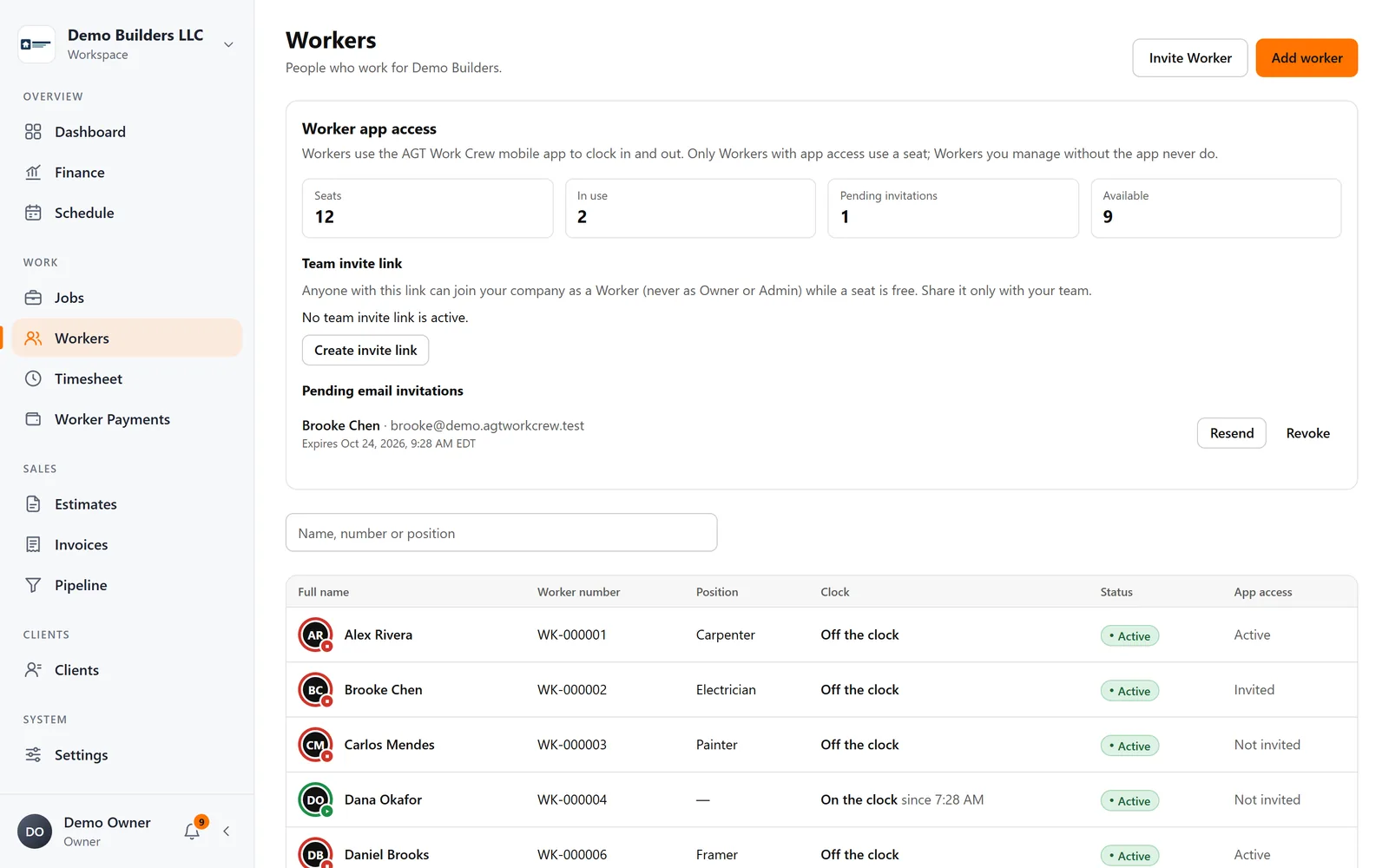
- Invite them by email, or share a team link or QR code. They join your company in the app, and they only see their own information.
- On day one they can clock in and out and start and end breaks, with a location check at clock events, even without a signal on site.
- They see their schedule, so the job address and the plan for the week aren't buried in a text thread.
- They can submit daily reports with photos, which gives them an obvious place to report progress and problems.
- They can check their own timesheet and payments, which makes the end-of-week check-in on hours simple.
- The app works in English, Spanish and Portuguese, so the instructions land in the language they read best.
A good first day is mostly preparation. When the basics are ready before the new worker arrives, you get a crew member instead of a question mark. See how the Worker app works.