How to pay your crew from real hours, not guesswork
Close the week, check open time cards and rates, handle reimbursements and give every worker a statement they understand.
By AGT Work Crew Team
It's Thursday night in Brockton. Payday is tomorrow, and you're at the kitchen table with a calculator, a stack of receipts and a text from a worker asking why last week's pay was short. One time card from Tuesday was never closed. Somebody got a raise two weeks ago, and you're not sure it made it into the numbers. Paying the crew shouldn't feel like this every week.
Payday mistakes are expensive in more ways than one
A wrong amount isn't just a math problem. Underpay someone and you've damaged trust, and possibly broken the law. Overpay and the money is hard to get back. Either way, the crew starts double-checking everything you hand them, and you spend Friday answering questions instead of running jobs.
Most of these mistakes don't come from bad intentions. They come from a messy process: hours that aren't final, rates nobody wrote down, extras that live in a text thread.
1. Close the week before you pay it
The most common payday mistake is paying from hours that aren't finished. Before you calculate anything:
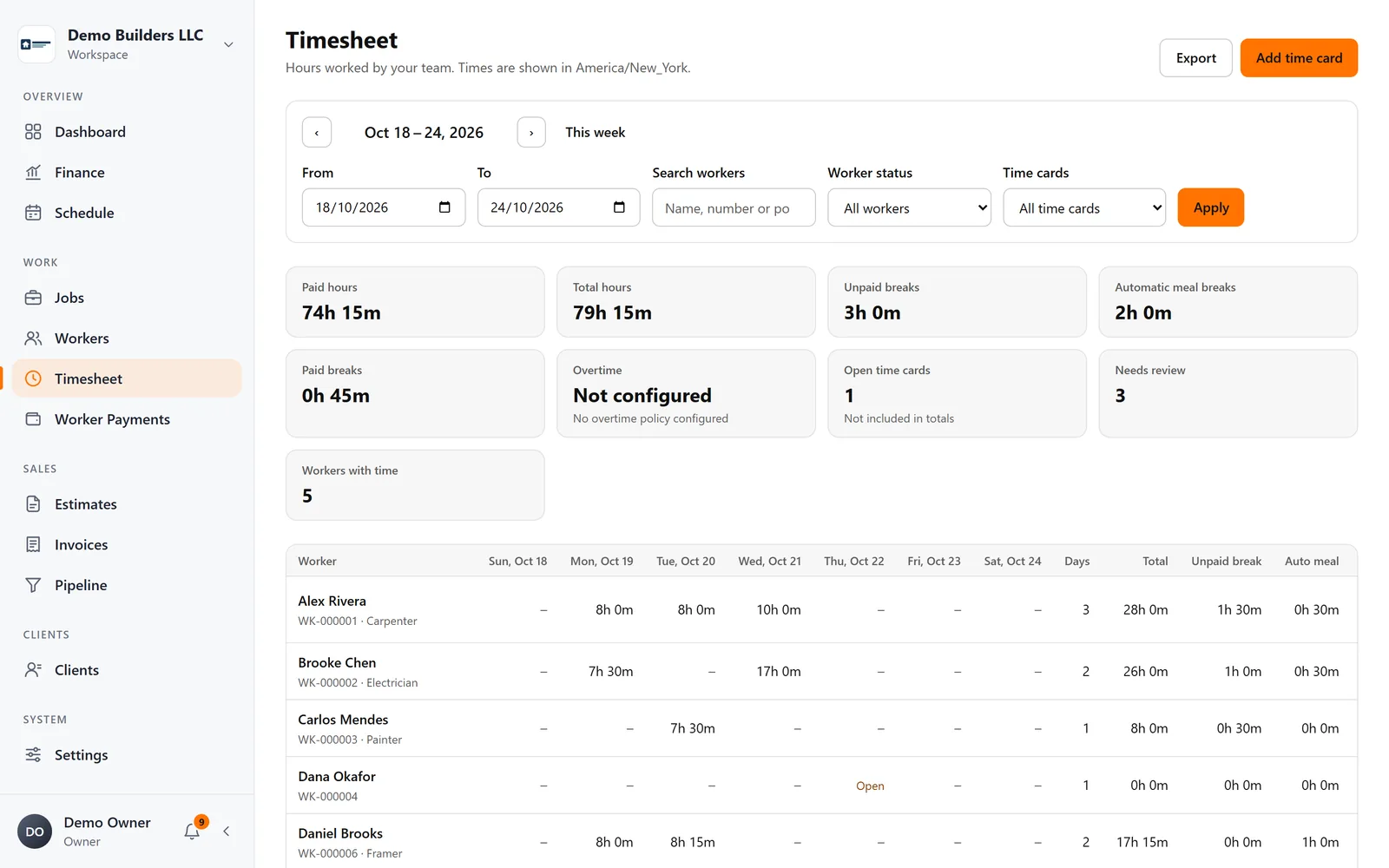
- Look for open time cards. A shift with a clock-in and no clock-out is either a forgotten tap or a real problem. Either way, it needs an answer before it becomes a paycheck.
- Review the entries that look off. Very long days, missing breaks, hours on a job that was already finished.
- Fix with a reason. If you change a time card, write down why, so you can explain it later.
Pick a cutoff, for example Monday at noon for the week that just ended, and stick to it. Your crew will learn the rhythm.
2. Keep rates in one place, with dates
Rates change. Someone gets a raise, someone moves from helper to carpenter, a new hire starts at a trial rate. The trouble starts when the new rate lives in your head.
- Write every rate down with the date it starts. A raise that starts on the 15th applies to hours worked from the 15th on, not to the whole pay period.
- Never pay a worker with no rate on file. If a new hire worked before you set the rate, set it first.
- Don't overwrite old rates. Keep the history, so you can always show how an old payment was calculated.
3. Handle reimbursements and deductions on purpose
Extras are where pay gets confusing. A worker buys screws at the hardware store in Quincy on the way to the job. Another asks for an advance. Each of these should be:
- A separate line, not mixed into the hours. A reimbursement is not wages, and it shouldn't look like it.
- Backed by something. A receipt for reimbursements, a written agreement for advances.
- Explained. "Reimbursement, screws, hardware store receipt" beats a mystery number.
Be careful with deductions. Rules on what an employer can deduct from wages are strict, so check with your accountant or attorney before you take anything out of someone's pay.
4. Give statements people can actually read
A worker who understands their pay asks fewer questions and trusts you more. A good statement shows:
- The period it covers.
- Hours and rate, and ideally which job the hours were on.
- Every reimbursement, deduction or adjustment, each with a short description.
- The total, clearly marked.
If English isn't a worker's first language, a clear layout matters even more. Numbers in a simple table are easier to follow than a paragraph.
5. Keep a history you can stand behind
Mistakes will happen. When they do, don't erase the old payment. Mark it as void, record a corrected one and keep both. Months later, when someone asks what happened, you'll have the answer in front of you instead of in your memory.
This is not the same as payroll
Calculating what each worker earned is one part of paying people. Withholding taxes, filing forms and moving the money are a separate job. That's what your payroll provider or accountant does. Getting the earnings right first makes their job, and yours, much easier.
How AGT Work Crew helps
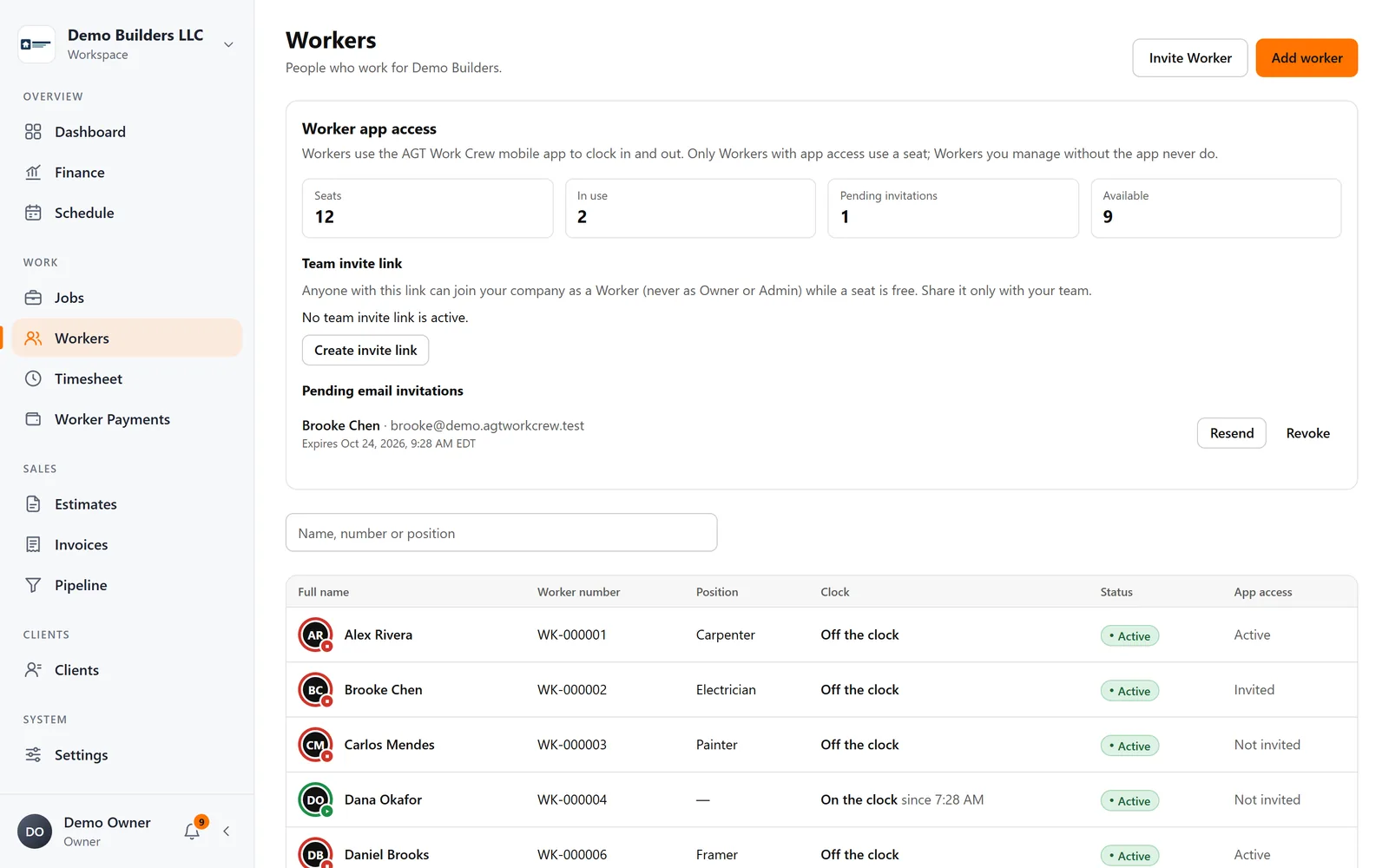
Worker Payments in AGT Work Crew turns tracked hours into what each worker earned:
- Create a payment run for a period. Hours come from the timesheet and are multiplied by each worker's effective rate, with a breakdown by job.
- Open time cards and missing rates are flagged before anything is paid, and duplicate payments for the same hours are prevented.
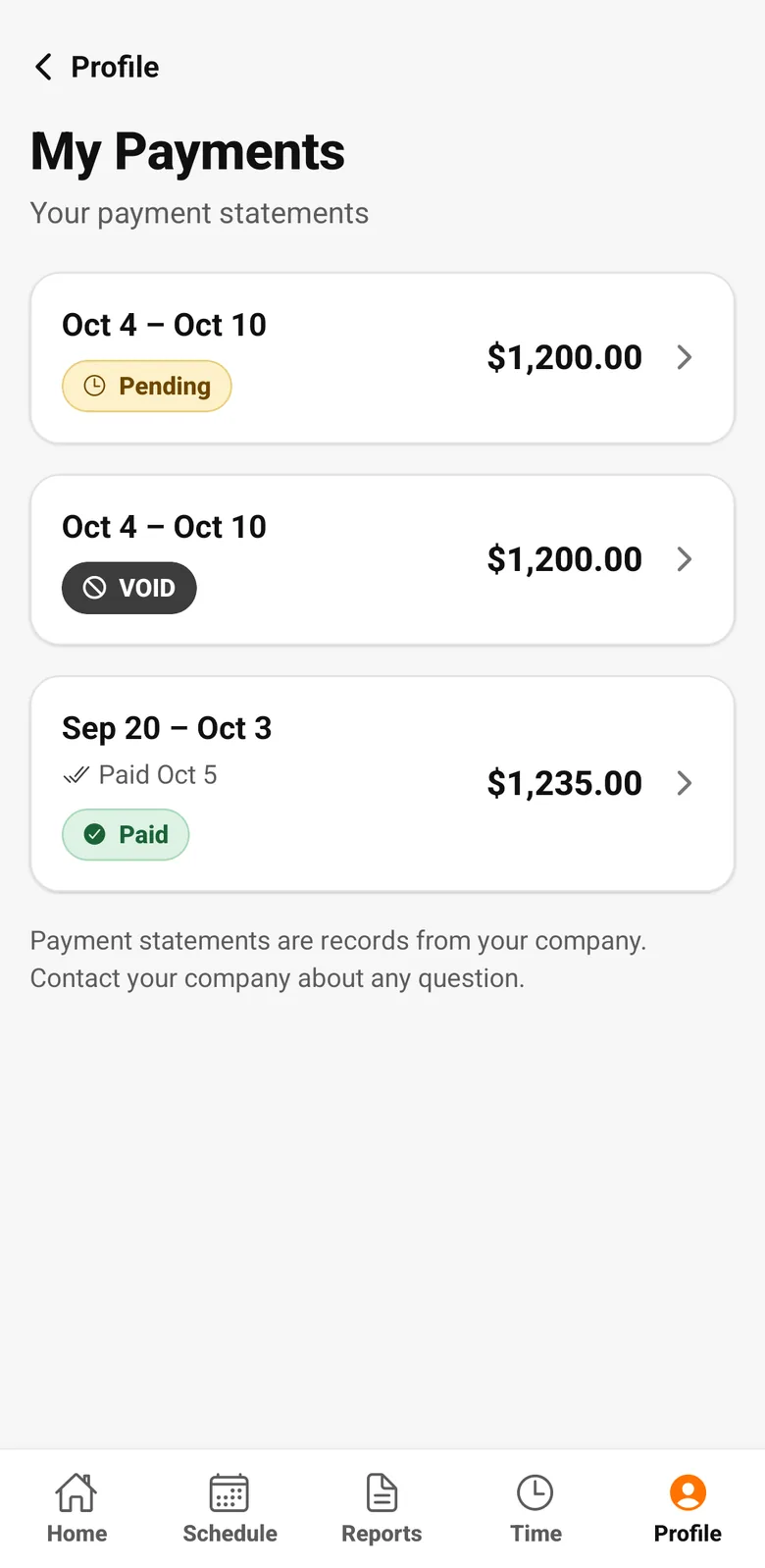
- Add reimbursements, deductions and other adjustments, then mark the run Paid. A payment can be marked Void, and the history is kept.
- Download PDF statements, a summary PDF or a CSV, or email statements to workers.
- Workers see their own payments in the app and are notified when they're paid.
It's not payroll: it doesn't withhold taxes, file forms or send money. Your payroll provider or accountant still handles that part.
When pay comes from real hours and real rates, Friday gets a lot quieter. See how Worker Payments works.