Morning crew dispatch without the group-text chaos
Plan tomorrow the afternoon before, give each worker one assignment with job and address, and handle 6 a.m. changes without confusing the crew.
By AGT Work Crew Team
It's 6:10 a.m. Your phone has fourteen unread messages in the crew group chat. Someone is asking whether they're on the Medford kitchen or the Waltham deck today. Someone else needs the address again. The tile saw is in a truck that's already on I-93 heading the wrong way, and the homeowner in Arlington just texted that the dog walker will be at the house until 8. You haven't had coffee yet.
Morning dispatch doesn't have to look like this. Most of the chaos comes from decisions that were left for the morning when they could have been made the afternoon before.
Why mornings turn into group-text chaos
The pattern is familiar in small crews:
- Tomorrow's plan is decided tomorrow. The owner works it out in the truck at 6 a.m., so everyone else waits.
- The group chat is the schedule. Assignments, addresses, changes and jokes all scroll together. By 7, nobody knows which message is the current plan.
- Assignments are by crew, not by person. "The guys are on Medford" leaves each worker to figure out where they personally belong.
- Nobody closes the loop. At the end of the day you don't know what got done, so tomorrow's plan starts with guesses.
Plan tomorrow the afternoon before
The single biggest change you can make: lock tomorrow's plan by mid-afternoon today. Pick a fixed time, 2 or 3 p.m., and treat it like a standing appointment.
At that time, go through each active job and decide:
- Is the job ready for tomorrow? Materials on site, access confirmed, the previous step finished.
- How many people it needs, and with what skills.
- Anything unusual: an inspection window, a delivery, a homeowner who needs the driveway clear by 8.
Then check with the homeowners whose day matters. A two-minute call at 3 p.m. is better than a locked door at 7 a.m.
One assignment per worker, with job and address
Each worker should be able to answer three questions the night before, without asking anyone:
- Where am I going? The job and the full address, not "the place on Mass Ave."
- What time do I start? If one crew starts at 7 and another at 8 because of a neighbor or a delivery, say so.
- What am I doing there? A short description of the task, so they show up ready, not waiting for instructions.
Make the assignment personal. If two people are going to Medford and one is splitting the day between Medford and a punch-list visit in Belmont, each of them should see their own plan, not a summary written for the whole crew.
Who brings what
Half of the lost mornings in a small company are about equipment, not people.
- Name the person responsible for each shared tool or material that has to move: the tile saw, the ladder rack, the dumpster permit, the leftover trim from last week.
- Put it in the assignment, not in a separate message. "Medford, 7:00, bring the tile saw" is one instruction. Two separate texts are two chances to miss something.
- Check the night before that the item is where it should be. A five-minute look at the shop beats a thirty-minute detour across town in traffic.
When plans change at 6 a.m.
They will. Someone calls out sick, a delivery slips, the inspector moves the window, a storm comes in faster than forecast. What matters is how you handle it:
- Change the plan in one place first. Update the schedule itself before you send any message, so the written plan is always the true one.
- Contact only the people affected, directly, with the new job, address and start time. A message to the whole group invites ten replies and confusion.
- Tell the homeowner whose crew is late or moved, before they notice.
- Don't rebuild the whole day. Move the fewest people needed to fix the problem. Every extra change is another chance for someone to end up at the wrong house.
The plan doesn't have to be perfect. It has to be written down, and it has to be the only version.
Close the loop at end of day
Tomorrow's plan is only as good as what you know about today. Before people leave the site, ask for a short status on each assignment:
- Done, in progress, or blocked?
- If blocked, why? Missing material, waiting on another trade, a question for the homeowner.
- Anything needed for tomorrow? A part, a tool, an extra hand.
Collected every afternoon, these few answers turn your 2 p.m. planning session from guesswork into a quick review.
How AGT Work Crew helps
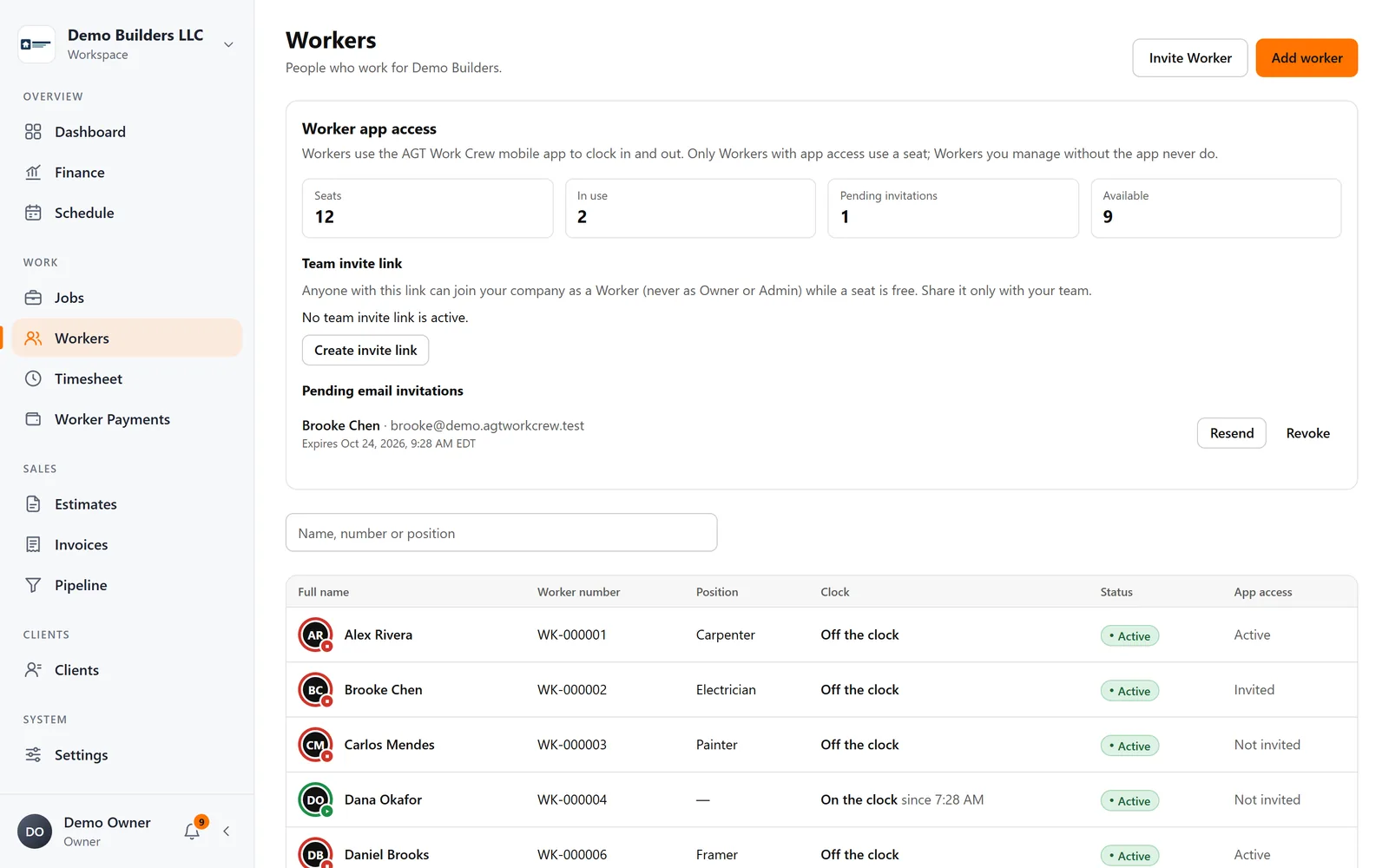
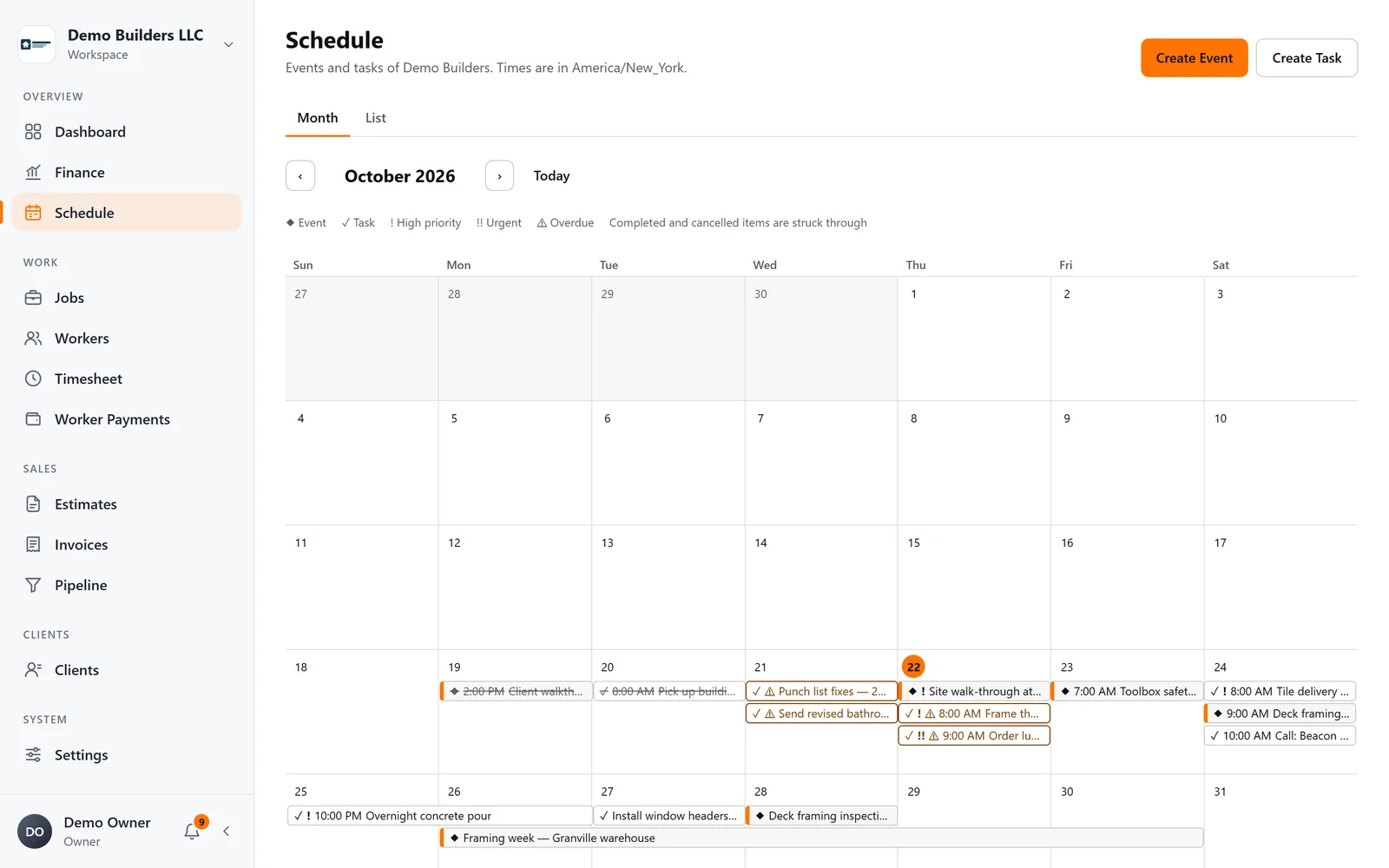
Scheduling in AGT Work Crew gives the crew one written plan instead of a scrolling group chat.
- Create events and tasks that are date-only, timed or span several days, and review them in month or list view.
- Assign specific workers to each item, so everyone sees their own assignment, not a summary for the whole crew.
- Link each item to the client, property, opportunity or job it's for, so the job and its address are right there.
- Each item is scheduled individually. When something changes at 6 a.m., you update that one item and the written plan stays accurate.
- Workers see their schedule in the app and update the status as they go, so at the end of the day you know what was finished.
Mornings run smoother when the plan was made the afternoon before and lives in one place everyone can check. See how scheduling works.