How to track materials and expenses per job so nothing slips
Small purchases, returns and leftovers quietly eat your margin. Log every cost on the right job and check it against the estimate every week.
By AGT Work Crew Team
It's Friday afternoon and the receipts are everywhere: a crumpled one from the lumber yard in the cup holder, two from the big-box store on your phone, a supply-house slip with no job name on it, and a card statement you'll look at next month. Somewhere in that pile is the difference between a bathroom in Quincy that made money and one that didn't. You just can't see it yet.
Most cost overruns on small jobs aren't one big mistake. They're dozens of small purchases that never got tied to the job that caused them.
Why materials slip through the cracks
On a typical remodeling job, materials and other expenses come from everywhere:
- Supply-house accounts billed at the end of the month, often for several jobs at once.
- Quick runs for screws, caulk, a missing fitting or a second box of tile.
- Card purchases made by you, a lead carpenter or whoever was closest to the store.
- Rentals, dumpsters and deliveries that arrive as separate bills days or weeks later.
Each one is easy to forget on its own. Together they can quietly eat a big part of your margin, and by the time the monthly statement shows up, nobody remembers which job the $180 run was for.
Log every cost when it happens
The single most useful habit is also the simplest: record the cost the same day you spend it, against a specific job.
- Snap a photo of the receipt before you leave the parking lot and write the job name on the paper copy. Five seconds now saves twenty minutes of guessing later.
- Ask the supply house to put the job name or address on the ticket. Most counters will add a job reference if you ask every time.
- Give every purchase a job, even the tiny ones. A $12 box of screws doesn't matter by itself. Twenty of them over a kitchen remodel do.
- Split mixed receipts. If one trip covered two jobs, divide the receipt right away while you still remember what went where.
- Decide who enters costs. If three people buy materials, one person should own getting them into the job each week.
Returns and leftovers are costs too
Two things trip up even careful owners:
Returns. You bought six boxes of tile, used four and returned two. If the purchase was logged but the return wasn't, the job looks more expensive than it was. Record the credit against the same job as the original purchase, and keep the return slip with the receipt.
Leftovers. The half-pallet of pavers or the extra sheets of drywall that go back to your shop are a decision, not an accident. Pick one rule and stick to it:
- Charge the full purchase to the job that bought it, and treat leftovers as a bonus on the next job, or
- Move the value of what you kept to the next job that uses it.
Either rule works. Switching between them job by job is what makes your numbers impossible to compare.
Small purchases that add up
Take a deck job in Braintree as an illustration (the numbers are an example, not a benchmark). The lumber package was estimated and ordered up front. But over four weeks the crew also made:
- 9 runs for fasteners, hardware and blades, about $35 each
- 2 trips for extra framing lumber after a layout change, about $260 each
- 1 rental for a post-hole auger, $140
- 1 extra dumpster pull, $425
That's roughly $1,400 that never appeared in the estimate, plus the hours spent driving to the store. None of it is unusual. It only becomes a problem when it stays invisible until the job is closed.
Check costs against the estimate every week
Once costs are logged per job, compare them with what you estimated. A short weekly routine is enough:
- Enter all receipts and bills from the past week on the right jobs.
- Compare materials and other expenses with the estimate for each running job.
- Look at progress. Spending 70% of the materials budget on a job that's 40% done is a warning, not a detail.
- Ask why about anything that moved more than you expected: a price increase, waste, a change the client asked for, or a wrong order.
- Turn client changes into change orders before you buy the material for them, not after.
The goal isn't to account for every penny. It's to notice a problem while there's still time to fix it.
Use what you learn on the next estimate
After a few jobs, the pattern becomes clear. Maybe small runs always add a few percent to materials. Maybe dumpster costs are always higher than you priced them. Write those lessons down and build them into the next estimate as real line items, instead of hoping this job will be different.
How AGT Work Crew helps
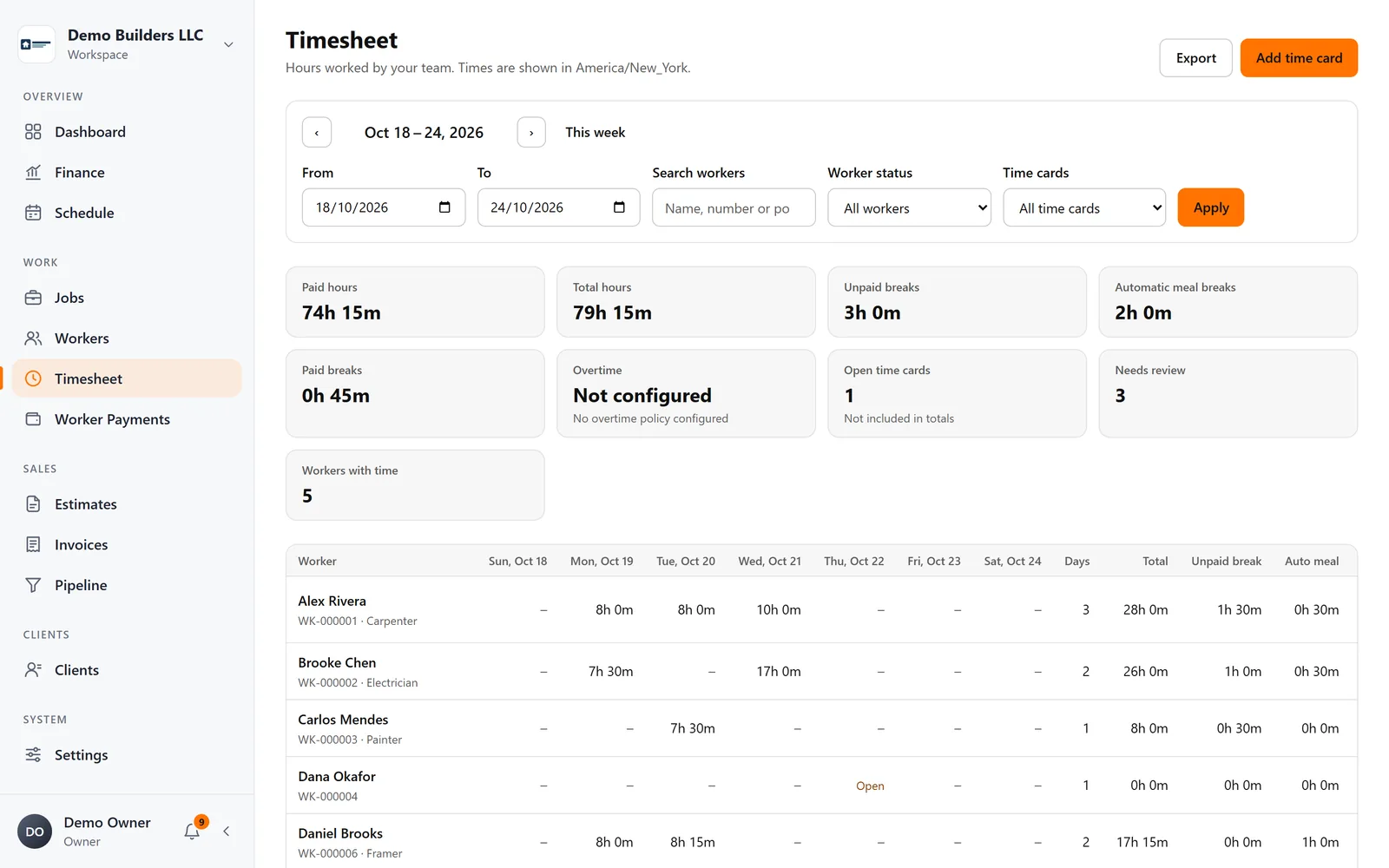
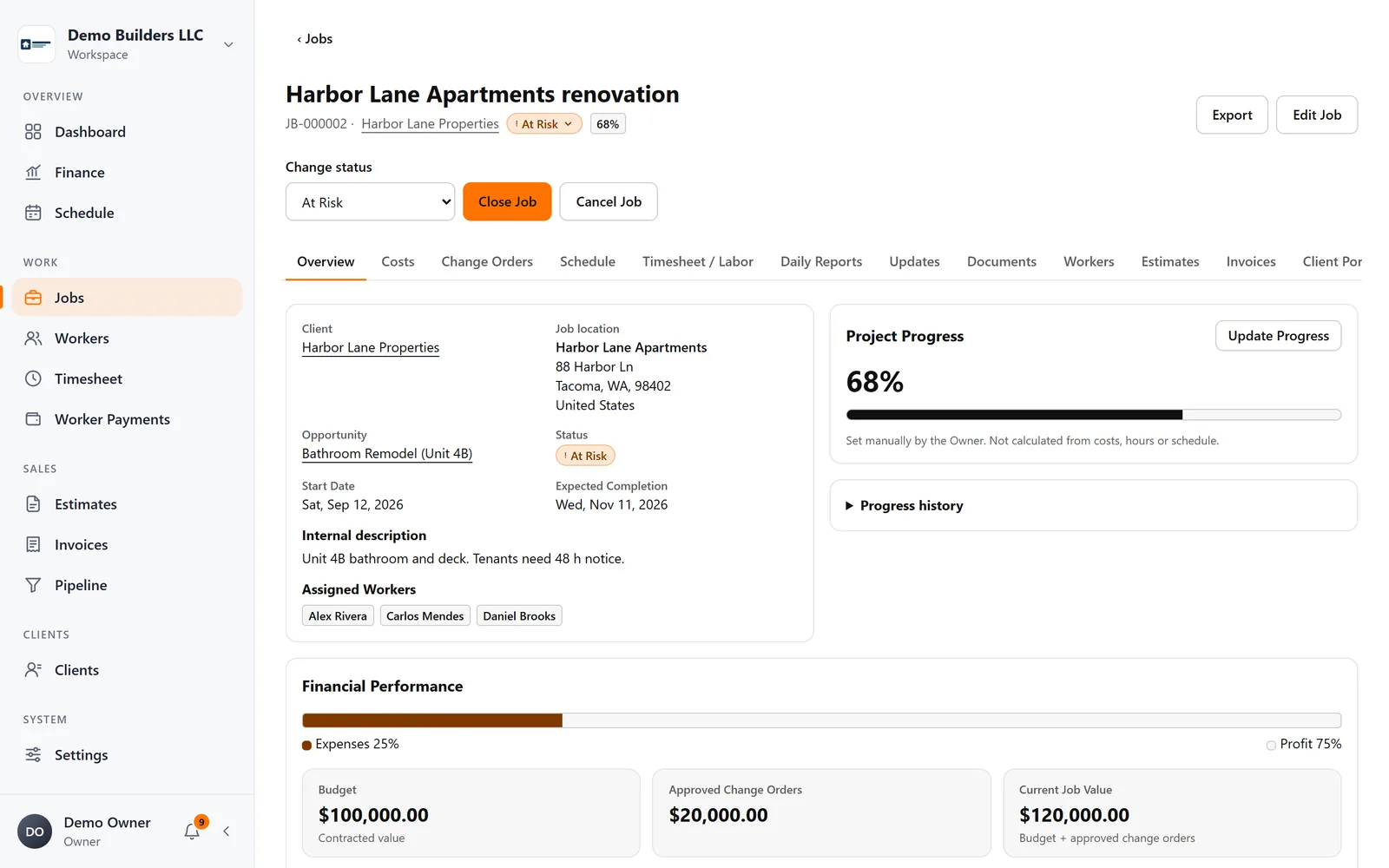
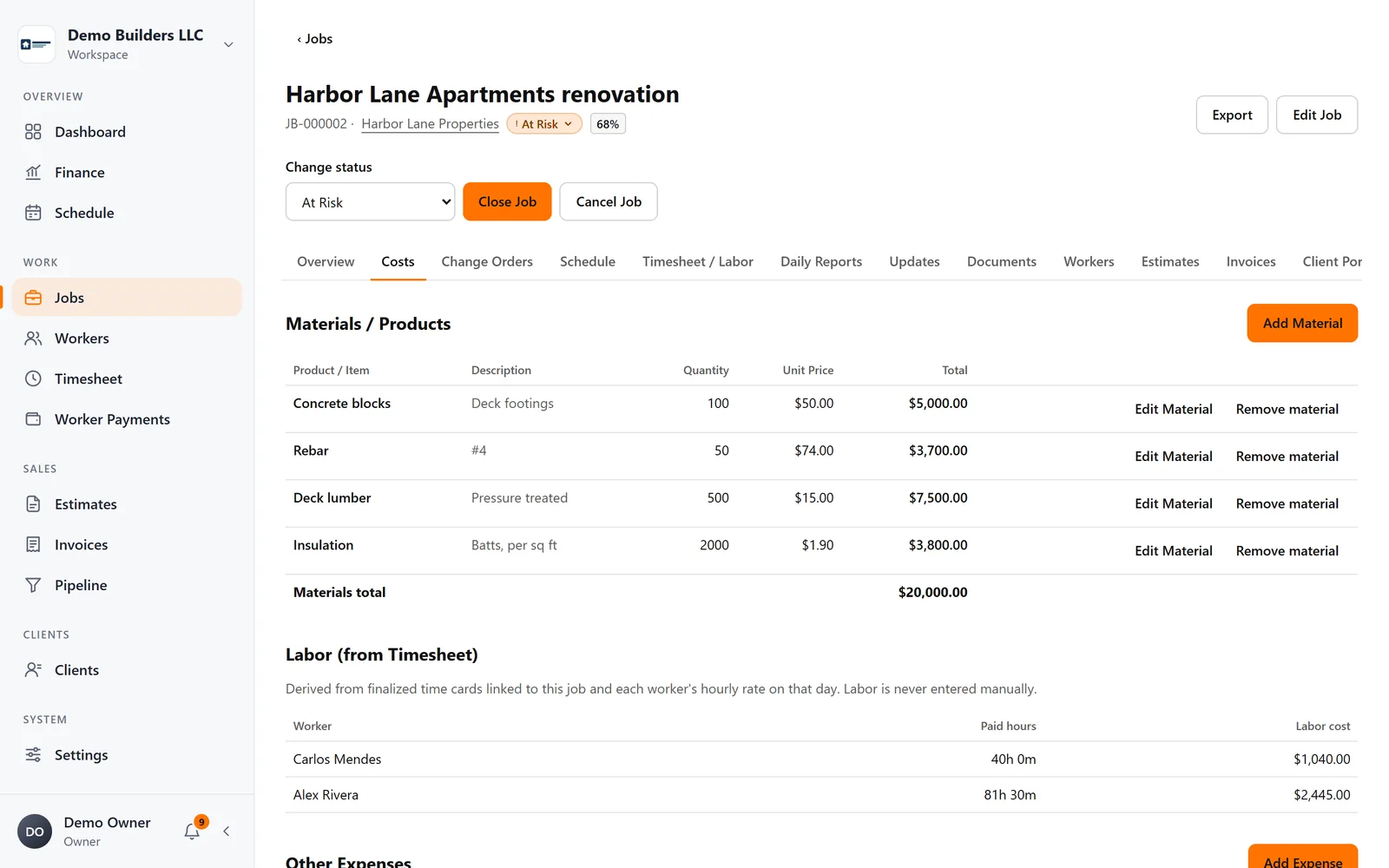
In AGT Work Crew, materials and other expenses live on the job they belong to, next to everything else that decides whether the job makes money.
- You add materials and other expenses to each job as they happen.
- Labor comes from the hours your crew tracks on that job, multiplied by each worker's rate for that date.
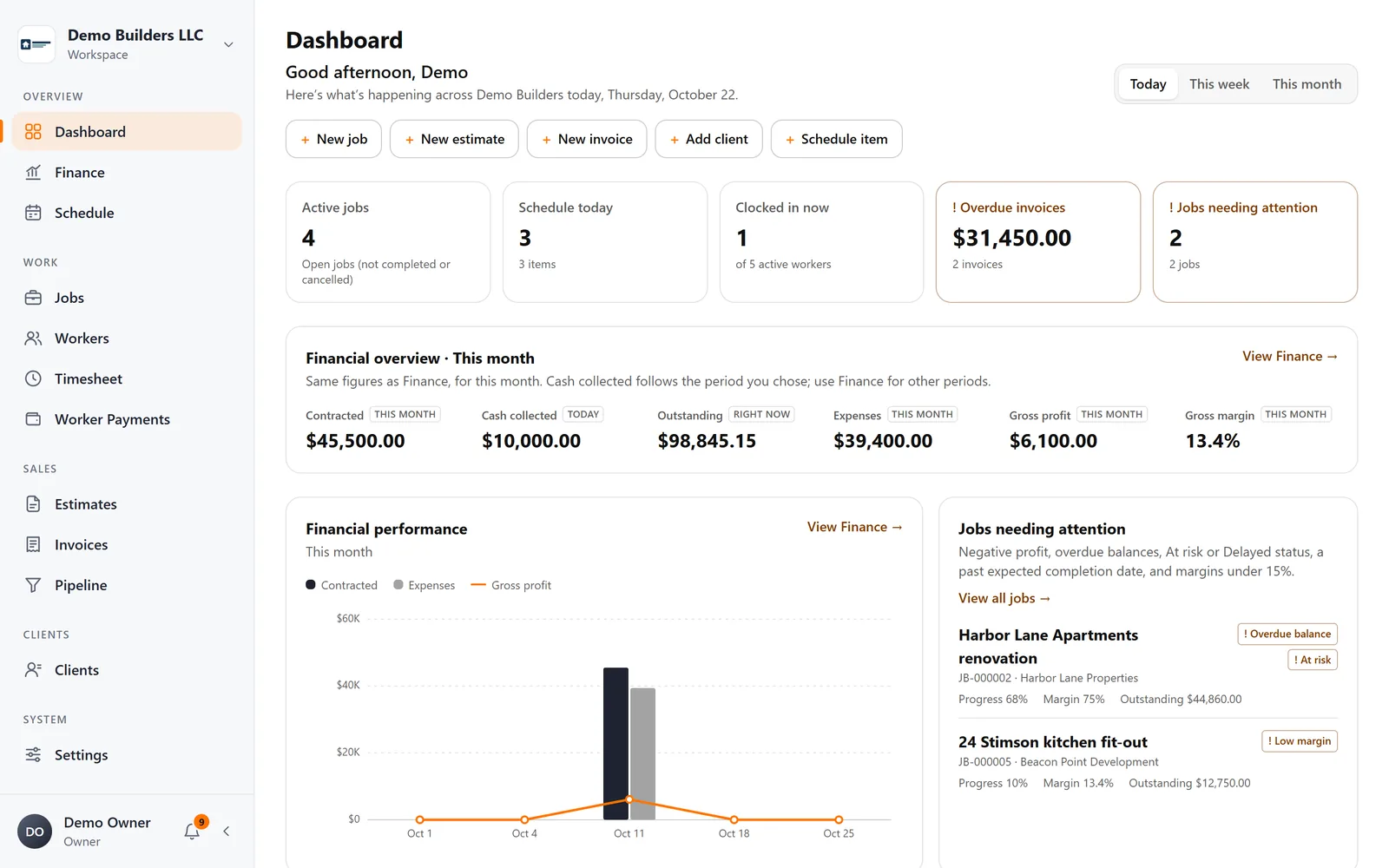
- Profit, margin and cost ratio are calculated for every job and stay up to date as costs come in.
- Documents and files can be kept on each job.
- You can export a job report as PDF or CSV, to download or email.
Every receipt tied to a job is one less surprise at the end. See jobs and profitability in AGT Work Crew.