Closing out a job: punch list, final invoice and lessons learned
How to close a construction job cleanly: punch list, final walkthrough, final invoice, document handover and a review of what the job really made.
By AGT Work Crew Team
The bathroom in Needham looks finished. The tile is grouted, the vanity is in, the crew has already moved to a porch rebuild in Framingham. But the homeowner still has a list: a towel bar that never went up, a door that rubs, a caulk line they don't like. The last invoice hasn't gone out because "we're not quite done." Two months later, you're still driving back for small things, the final payment is still open, and you never did figure out whether the job made money.
Finishing the work and closing the job are two different things. The second one is where a lot of small companies leave money and goodwill on the table.
Why jobs drag on at the end
The last few percent of a job are the hardest to schedule. The crew is excited about the next project, the remaining tasks are small and scattered, and nobody owns the finish. Meanwhile:
- The client's list keeps growing, because there's no clear point where it stops.
- The final invoice waits until "everything" is done, and everything keeps moving.
- Documents and photos stay scattered, so the client has to call when they need a paint color or a warranty card.
- The numbers never get reviewed, and the next estimate repeats the same mistakes.
A simple closeout routine fixes all four.
Build the punch list together
A punch list works when it's written down, agreed on and finite. Walk the space with your lead before the client does, and fix what you can find yourself. Then:
- Write every item down with the room and a short description: "Primary bath, towel bar left of the vanity, not installed."
- Add a photo for anything that's hard to describe, like a paint touch-up or a scratch on a door.
- Separate punch items from new work. A towel bar that was in the scope is punch. A new shelf the client just thought of is a change order.
- Assign each item and a date. "Next week" is not a date.
The goal is one list that both you and the client recognize as complete.
Do a real final walkthrough
Schedule the final walkthrough like a meeting, not a quick chat in the driveway. Give the client time to look closely, ideally in daylight. In late fall around Boston, that means planning it before the sun goes down at half past four.
Walk room by room with the punch list in hand:
- Show what was done, not just what's left. Point out the work behind the walls, the new blocking for the grab bar, the upgraded shutoff valves.
- Check off each punch item together, out loud.
- Explain care and maintenance: how to clean the new tile, when to reseal the grout, how to run the bathroom fan in a damp New England summer.
- Agree that the list is closed. Anything new from here on is a new request, priced separately.
A client who walked the job with you and saw every item checked off is much more comfortable writing the last check.
Send the final invoice right away
The best day to send the final invoice is the day of the walkthrough, while the client is still standing in the finished room. Make it easy to understand:
- A clear due date, written as a real date.
- What's been paid and what's left, so the final amount makes sense next to the earlier payments.
- Approved change orders as separate lines, so nothing looks like a surprise.
If one small punch item is still waiting on a backordered part, agree with the client on how you'll handle it, but don't let a missing towel bar hold up the entire balance.
Hand over documents and photos
The client will need things after you leave: paint colors and sheens, tile and grout names, appliance manuals, manufacturer warranty papers, the photos of what's inside the walls. Collect them in one place and hand them over together, instead of digging through your truck when they call next spring.
A clean handover is the last impression you leave, and it's often what clients remember when a neighbor asks who did their kitchen.
Keep your own copy with the job. Old houses in Greater Boston get worked on again, and the next call might be yours.
Review what the job really made
Once the last payment is in, sit down with the numbers while you still remember the job:
- Contract value plus approved change orders versus what you collected.
- Materials, labor and other expenses versus what you estimated for each.
- Profit and margin on the finished job.
Then ask a few honest questions. Which part of the job ran over? Was it the demo, a trade, or the punch list itself? Did change orders cover the extra work, or did you do some of it for free?
Carry the lessons into the next estimate
The review only matters if it changes something. Write down two or three lessons and use them the next time you price a similar job: more hours for demo in houses built before the war, a line for punch-list time, a different allowance for tile. Over a season, those small corrections add up to estimates you can trust.
How AGT Work Crew helps
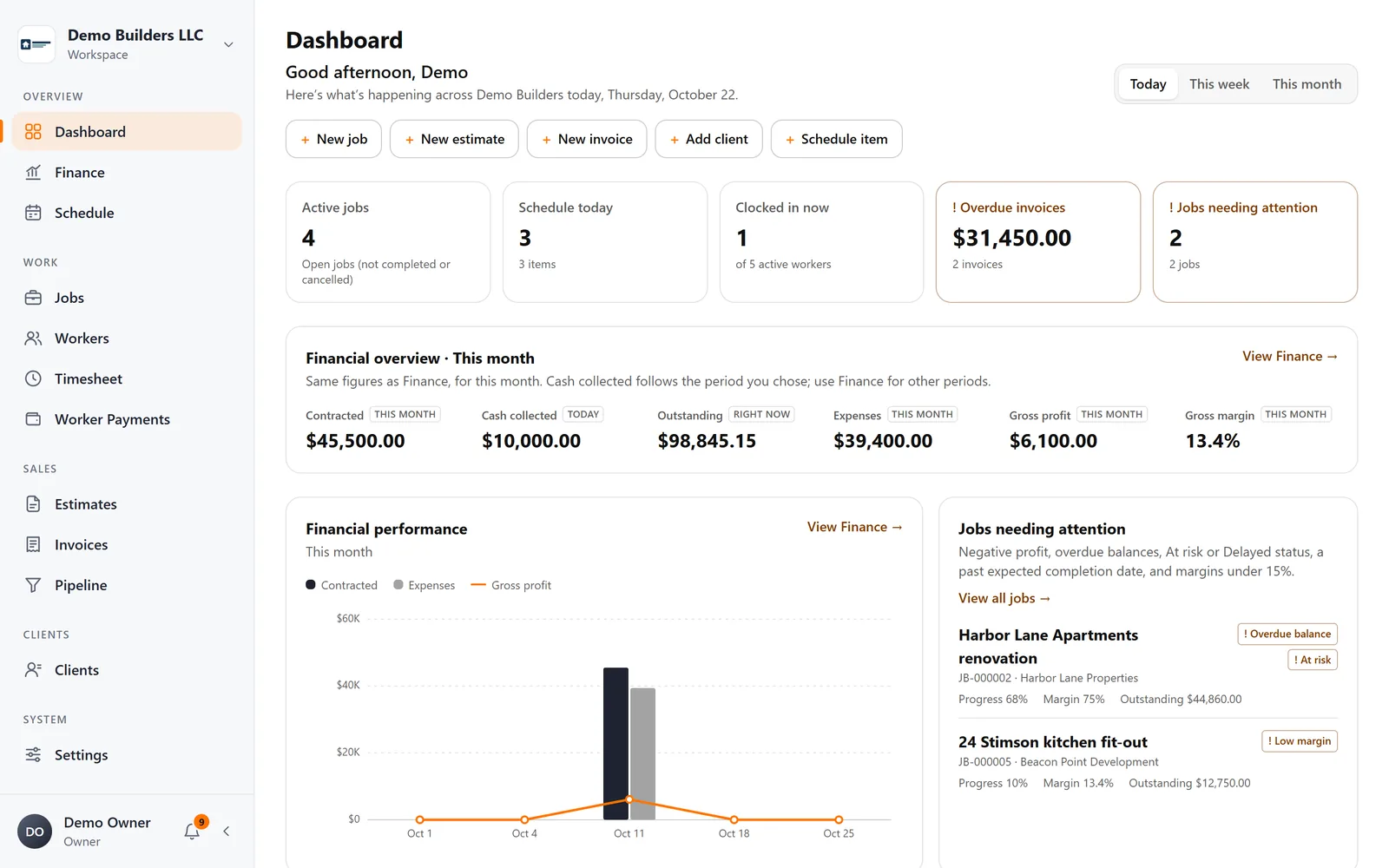
In AGT Work Crew, each job keeps the closeout in one place with jobs and profitability:
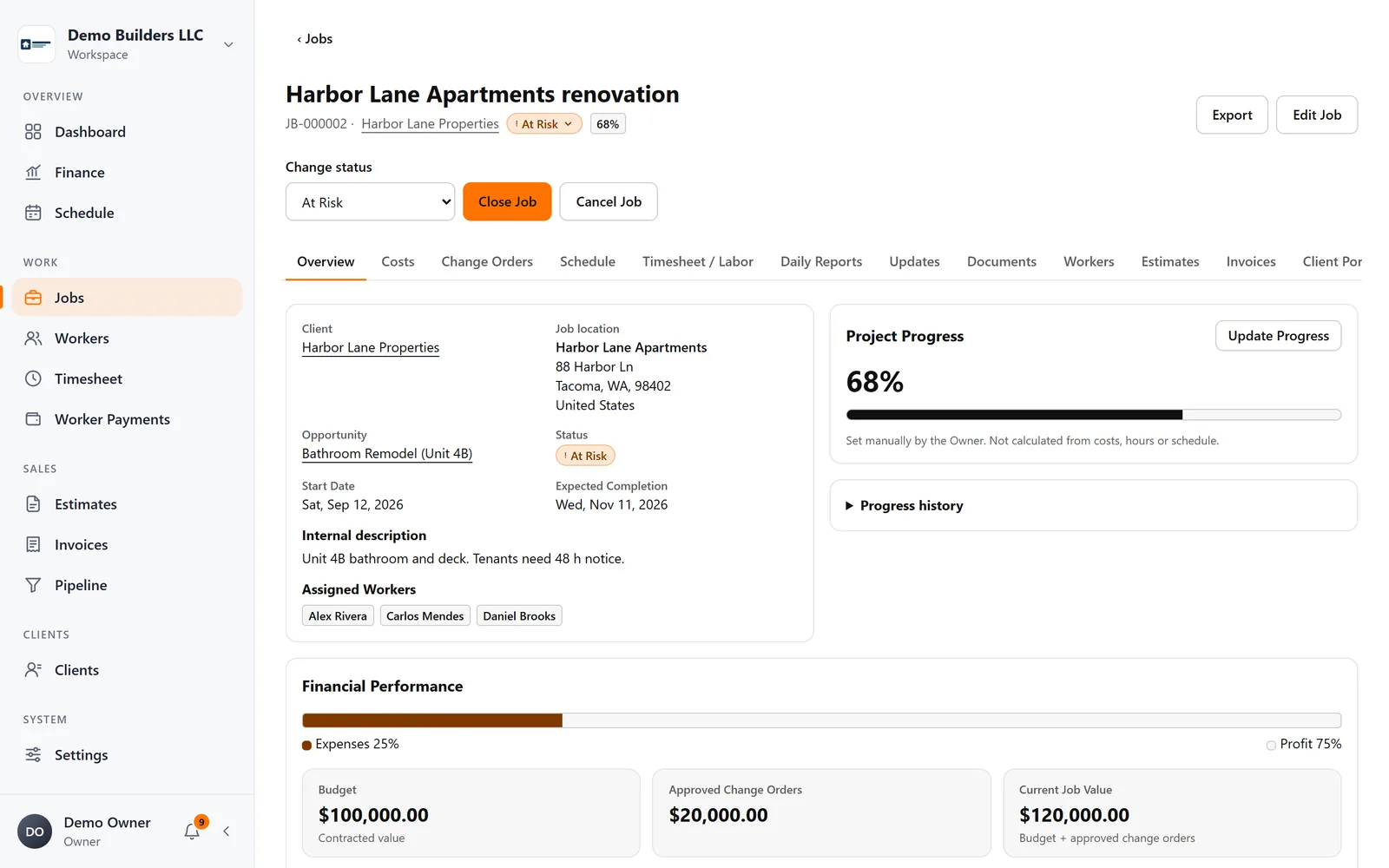
- Every job has a status and progress with history. You close the job when it's done, and reopen it if you need to go back.
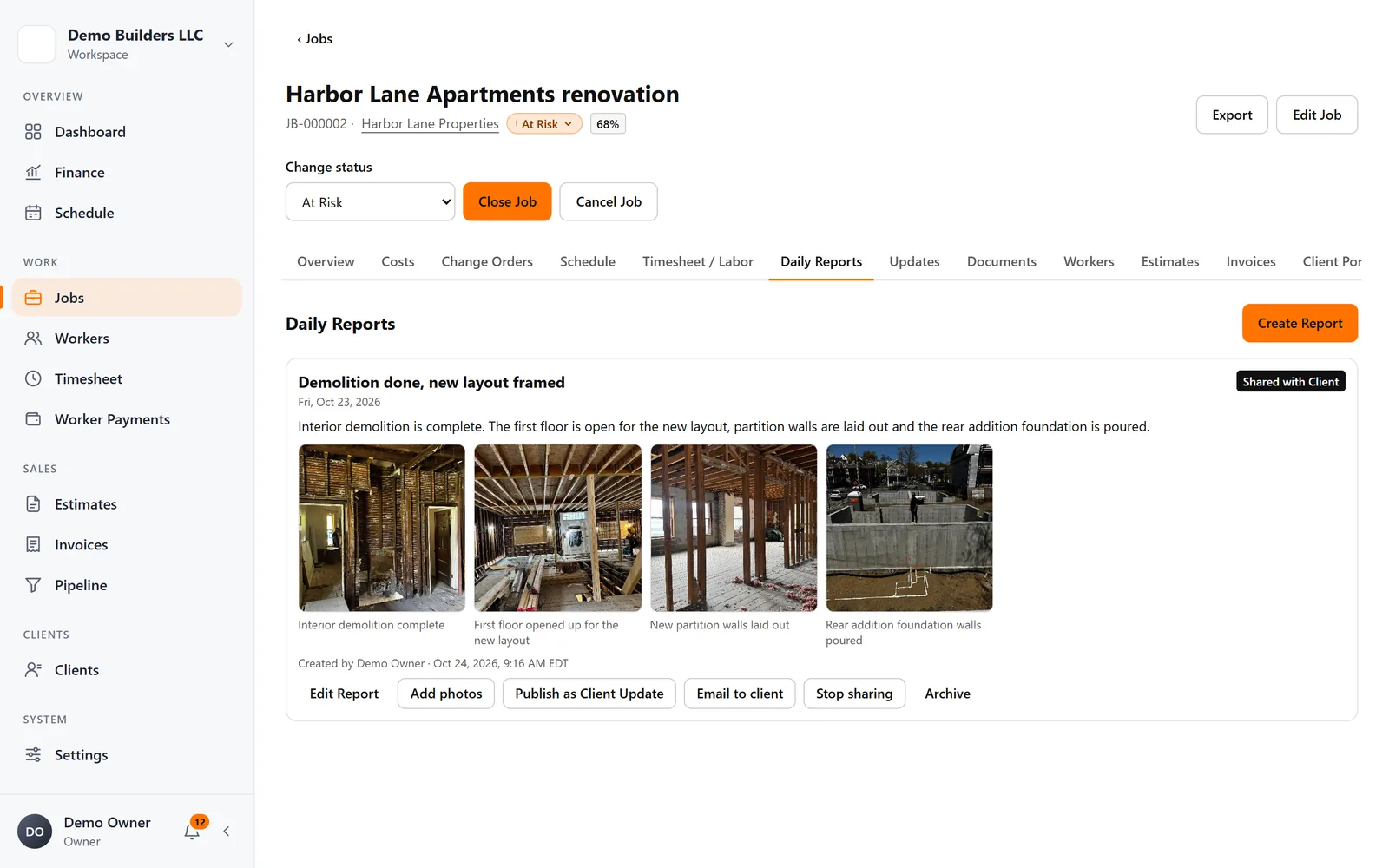
- Documents and files live on each job, and you can share the ones you choose with the client in the Client Portal.
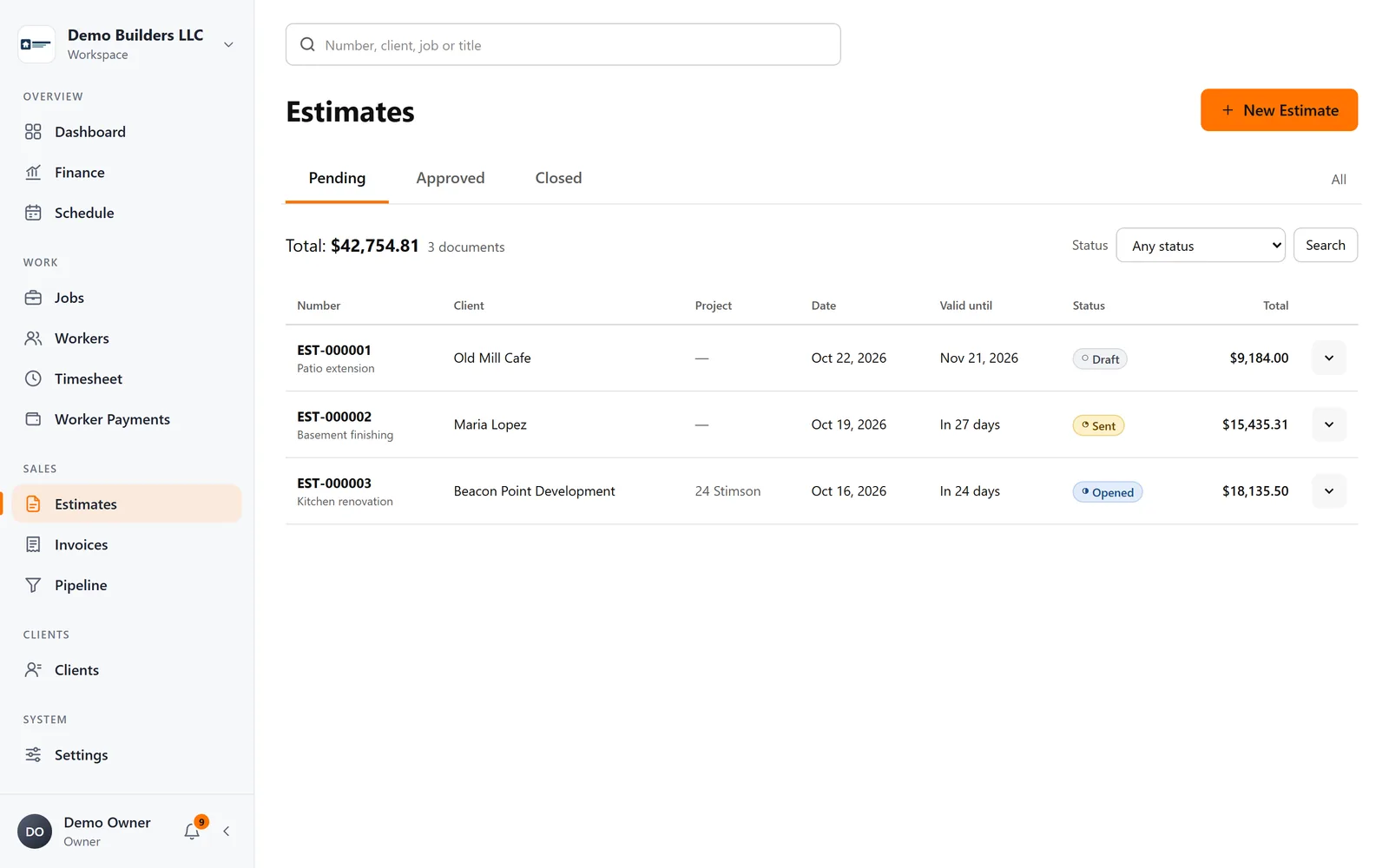
- Invoices have due dates, and you record partial and full payments as they come in.
- Profit, margin and cost ratio are calculated for each job from the contract value, approved change orders, materials, other expenses and labor from tracked hours.
- You can export a job report as PDF or CSV for your review.
A job isn't finished until it's closed, paid and reviewed. See jobs and profitability in AGT Work Crew.