Is this job making money? Job costing while the job is still running
Four numbers tell you whether a job is making money: value, materials, expenses and labor. How to check them weekly and catch overruns while you can still act.
By AGT Work Crew Team
Ask a contractor whether a job made money and you'll often hear, "I'll know when it's done." By then it's too late. The kitchen in Needham is finished, the client is happy, and three months later, when the receipts and hours finally come together, it turns out the job barely broke even. Nothing went obviously wrong. Small overruns piled up every week, and nobody was looking.
Job costing isn't an end-of-year exercise for your accountant. Done while the job is still running, it's the cheapest way to protect your margin.
Why most contractors find out too late
The numbers you need exist. They're just scattered:
- Hours live in texts, paper sheets and memory.
- Receipts live in the truck, the glovebox and three different supply-house accounts.
- Changes live in someone's head until the final invoice.
When every number arrives late, every decision arrives late too. You can't fix a job you only understand after it's closed.
The four numbers that tell you where a job stands
You don't need a complicated system. For each running job, you need four numbers, kept current:
- Current job value. The contract value plus approved change orders. Not pending ones, not the ones the client "agreed to" on the phone. If it isn't approved, it isn't revenue yet.
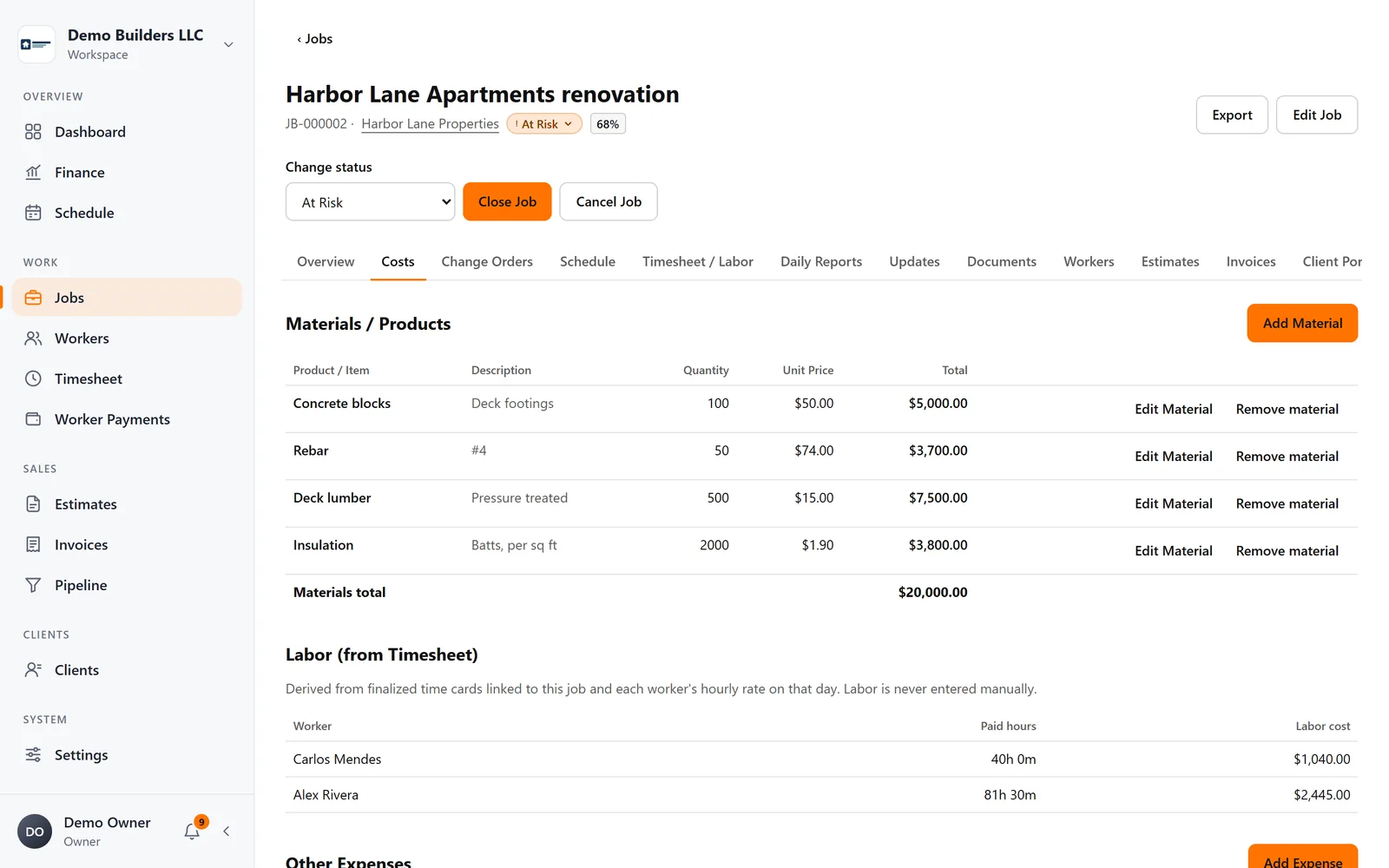
- Materials. Everything bought for this job: lumber, tile, fixtures, the quick runs to the supply house. Enter receipts weekly, not when the job closes.
- Other expenses. Dumpsters, permits, equipment rentals and anything else that isn't materials or your own crew's labor.
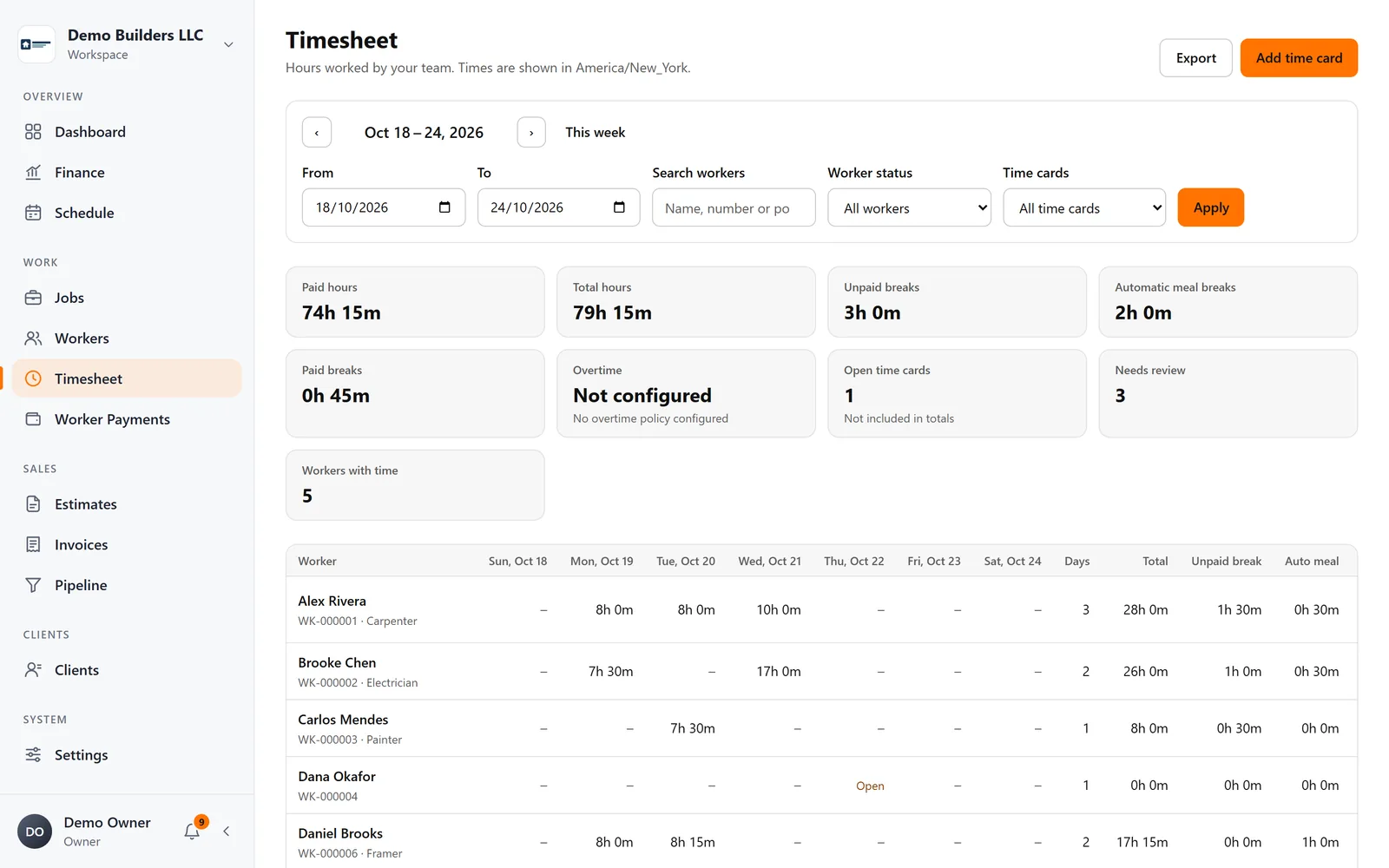
- Labor. Hours worked on this job, multiplied by each worker's rate on the day the work was done. Not an average rate, and not today's rate if someone got a raise halfway through.
From those four you get the three figures that matter:
- Profit = current job value − (materials + other expenses + labor)
- Margin = profit ÷ current job value
- Cost ratio = total costs ÷ current job value
A worked example
Take a bathroom remodel in Melrose (the numbers are for illustration). The contract is $30,000, and the client approved one change order for $2,000, so the current job value is $32,000.
At the end of week three:
- Materials: $7,800
- Other expenses (dumpster, permit): $1,200
- Labor: a lead carpenter at 100 hours × $40, plus helpers at 136 hours × $25 = $7,400
Total costs: $16,400. Cost ratio: about 51%.
Is that good or bad? It depends on how far along the job is. If tile is set and you're into fixtures, you're in good shape. If you're still closing walls, more than half the value is already spent with most of the work ahead. That's the signal you want in week three, not in week ten.
Make it a weekly habit
Pick one time every week, Monday morning works for many owners, and spend fifteen minutes on each running job:
- Make sure last week's hours are complete and assigned to the right job.
- Enter the receipts that came in during the week.
- Check the cost ratio against real progress. Spending ahead of progress is the earliest warning you'll get.
- Ask why about anything that moved more than you expected.
Fifteen minutes a week is cheap. Finding a $4,000 overrun after the job closes is not.
Warning signs to watch for
- Labor running ahead of the plan. Demolition that should have taken two days took four. Find out why before it happens again on the next phase.
- Work without an approved change order. If your crew is building something extra, you're paying the cost without adding the value.
- Too many small material runs. Five trips to the supply house a week means lost hours and poor planning, not just extra receipts.
- Winter. In New England, cold weather slows exterior work, adds heating and protection costs and pushes schedules. Price it into winter jobs and watch it closely from December to March.
What to do when a job is slipping
Spotting the problem early gives you options:
- Price and send the pending changes. Unapproved changes are often the biggest leak.
- Adjust the crew. Sometimes fewer people on site for a few days costs less than everyone waiting on an inspection.
- Talk to the client early, while there is still room to adjust scope or finishes.
- Learn from it. Compare the final numbers with your estimate and fix the next one.
How AGT Work Crew helps
In AGT Work Crew, every job keeps these numbers together, so you don't have to rebuild them from texts and receipts.
- Each job has its contract value plus approved change orders. Drafts and sent change orders are tracked, but only approved ones count.
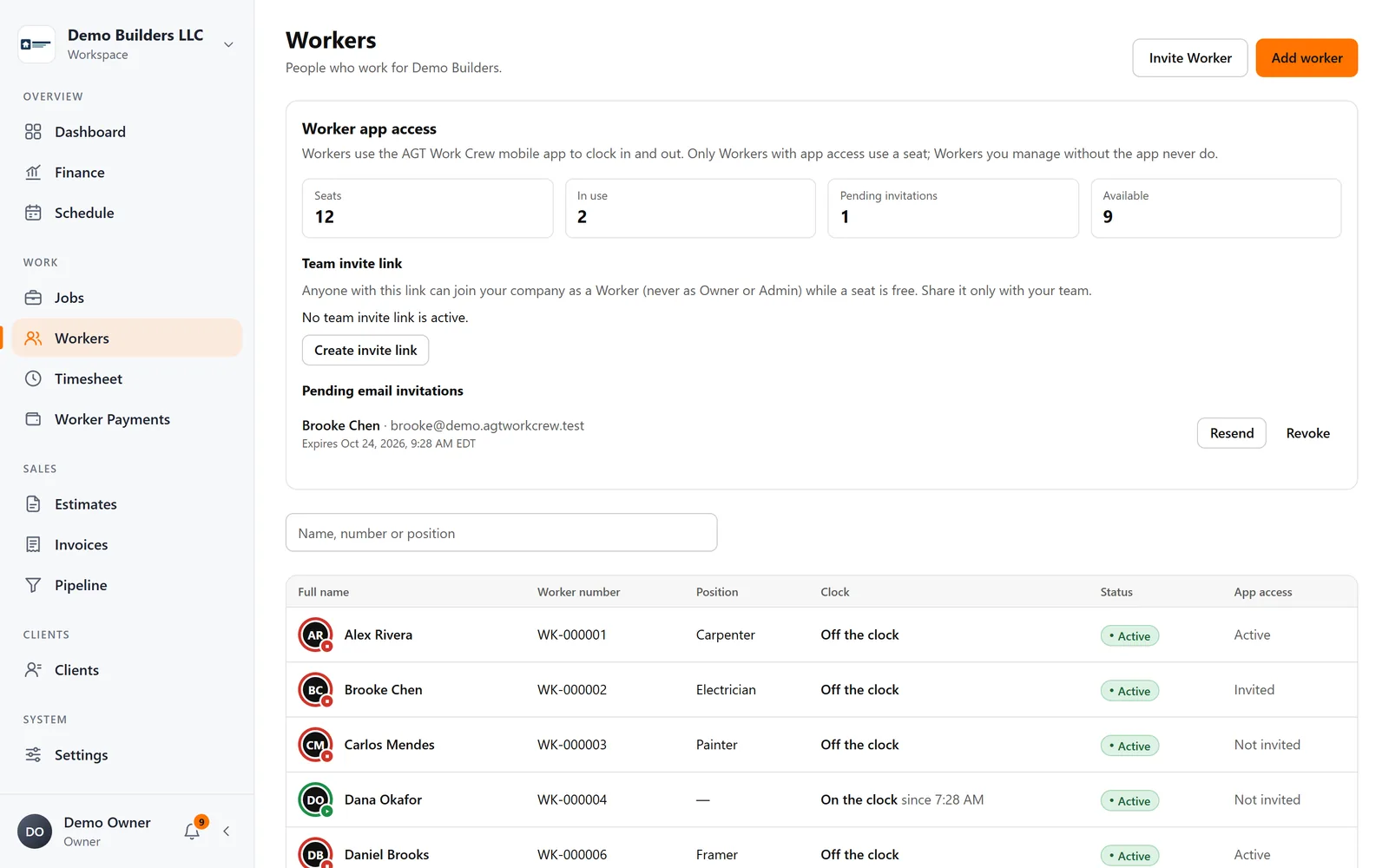
- You add materials and other expenses to the job. Labor cost comes from the hours your crew clocks on that job (or that you enter), multiplied by each worker's hourly rate for that date. Rates can change over time without rewriting history.
- Profit, margin and cost ratio are calculated for every job and stay up to date as work happens.
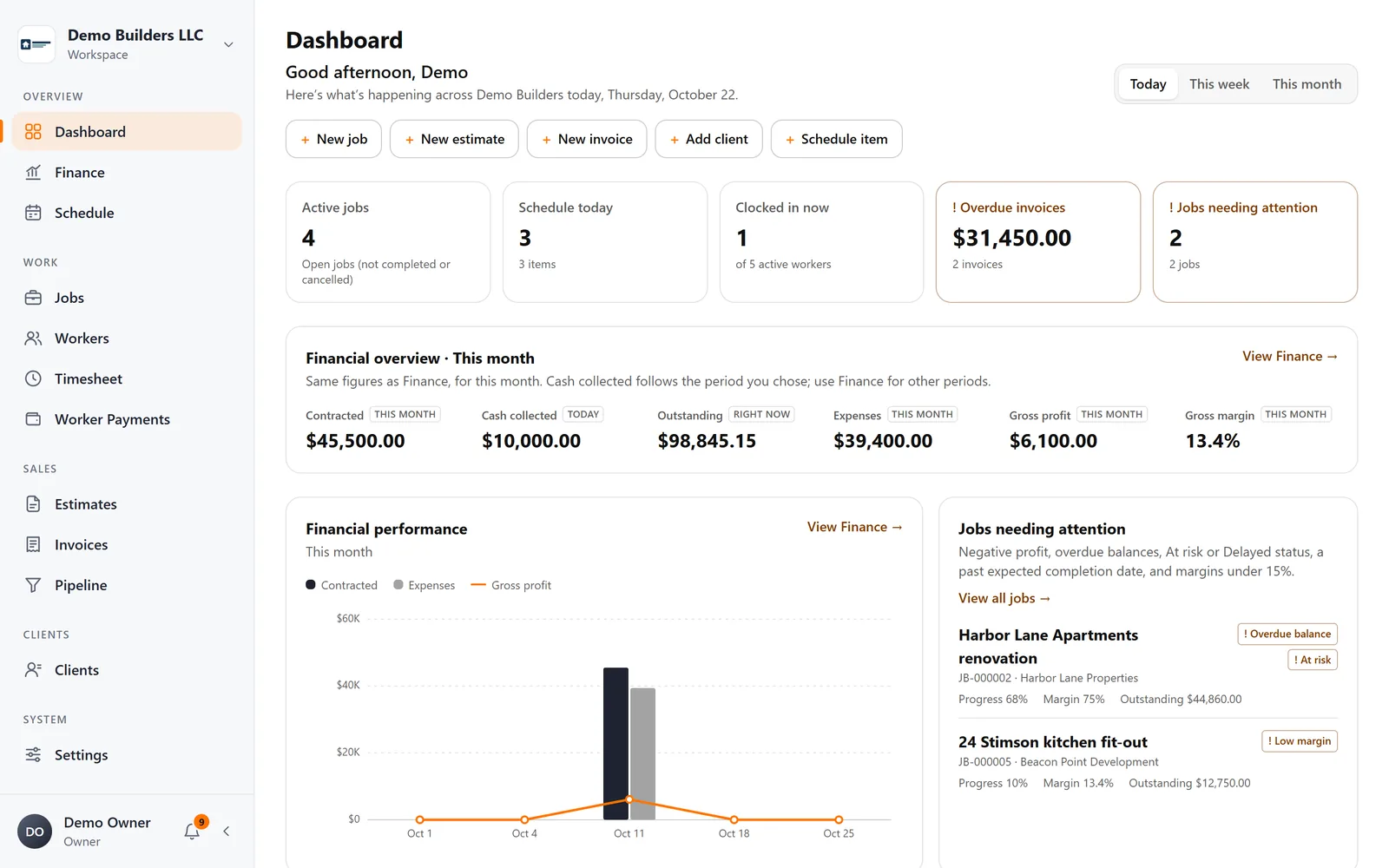
- Jobs that need attention show up on your dashboard.
- You can export a job report as PDF or CSV, to download or email.
The best time to find out whether a job makes money is while you can still do something about it. See jobs and profitability in AGT Work Crew.