How to look like a professional company on paper
Branded estimates, clear company details, readable line items and same-day replies: how small contractors around Boston look professional and charge fairly.
By AGT Work Crew Team
A homeowner in Newton has two estimates on the kitchen table for the same porch rebuild. One arrived as a photo of a handwritten page, with a total circled at the bottom and a cell number. The other came by email from the company's name, with a logo, an address, line items grouped by phase and a clear note on what isn't included. The prices are close. Which contractor gets the call back?
Most small contractors do excellent work and present it badly. The craftsmanship shows on the job site, but the paperwork is the first thing the client actually sees. Before anyone admires your finish carpentry, they read your estimate.
Why paperwork shapes what clients will pay
Homeowners can't easily judge framing or flashing details. They can judge whether your documents look organized. When the paperwork is clear, they assume the job will be too. When it's messy, they start comparing you on price alone, because price is the only thing they feel sure about.
That's the real cost of looking unprofessional: not only lost jobs, but jobs you win only by being the cheapest. Clear, consistent documents give you room to charge a fair price for good work, and to explain why.
1. Make every document look like it came from the same company
Consistency is what separates a company from a person with a truck. Pick one look and use it everywhere:
- The same logo, colors and layout on every estimate and invoice. A client who gets an estimate in one style and an invoice in another starts to wonder who they're dealing with.
- One company name, written the same way everywhere: on the truck, in your email, on your documents.
- A numbering system for estimates and invoices, so you and the client can talk about "Estimate 1042" instead of "the one from last Tuesday."
You don't need a designer. You need the same clean template, every time.
2. Put your company details where clients look for them
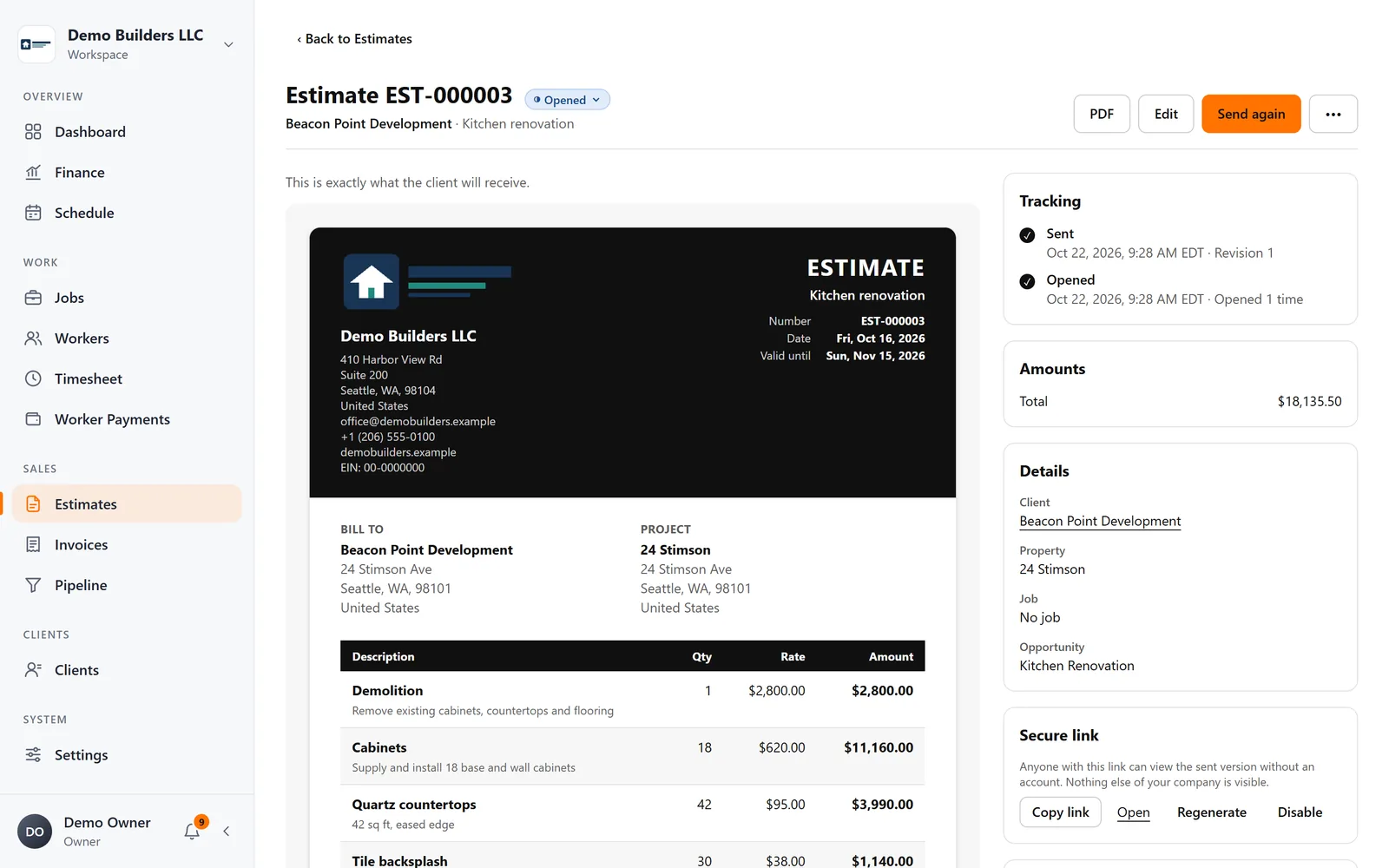
A client should never have to search for how to reach you. At the top of every document:
- Company name and logo
- Business address
- Phone and email for the person handling the job
- The client's name, the property address and the date
That last line matters more than people think. Plenty of contractors around Greater Boston work on several properties for the same client, say a home in Lexington and a rental triple-decker in Somerville. Naming the property on the estimate avoids the "which house is this for?" email.
3. Write line items a homeowner can read
A line item is written for the client, not for your supplier. "2x6 PT 12' qty 18" means something to you; "Pressure-treated framing for the new deck joists" means something to them. A few habits help:
- Group by phase or by room: demolition, framing, roofing, finishes.
- Use plain words, with a short description where it helps.
- Show discount and tax as their own lines, so the total is never a mystery.
- Attach what supports the price: a sketch, a product sheet, photos of the existing conditions. Old New England houses are full of surprises, and a photo of the rotted sill you found during the walkthrough explains that line better than any paragraph.
Readable doesn't mean exhaustive. You're explaining what the client is paying for, not publishing your cost sheet.
4. Send from your company, not from a personal inbox
An estimate sent from a personal address with a vague subject line looks like a side job. An email from your company name, with a clear subject and the document attached, looks like a business. It's also easier for the client to find three weeks later, when their spouse asks to see it.
The same goes for invoices. A professional invoice with a clear due date gets treated like a bill. A text with an amount gets treated like a favor that can wait.
5. Answer the same day
Speed is part of professionalism. A homeowner who called three contractors after a February ice dam will often go with the one who responds first with something clear. You don't have to send the full estimate the same day, but you can:
- Confirm you received the request and say when you'll visit.
- Send the estimate when you said you would, even if it's a short one.
- Follow up a few days later if you haven't heard back. Knowing whether they opened it changes what you say.
Clients rarely remember how fast your estimate arrived. They always remember waiting for one.
6. Let professionalism support a fair price
Once your documents look organized, you can stop apologizing for your price. Explain what's included, what isn't, and how changes will be handled. A client who understands the value has fewer reasons to haggle line by line, and when they do, a clear estimate keeps the conversation on scope instead of discounts.
How AGT Work Crew helps
AGT Work Crew gives every estimate and invoice the same professional look without extra work.
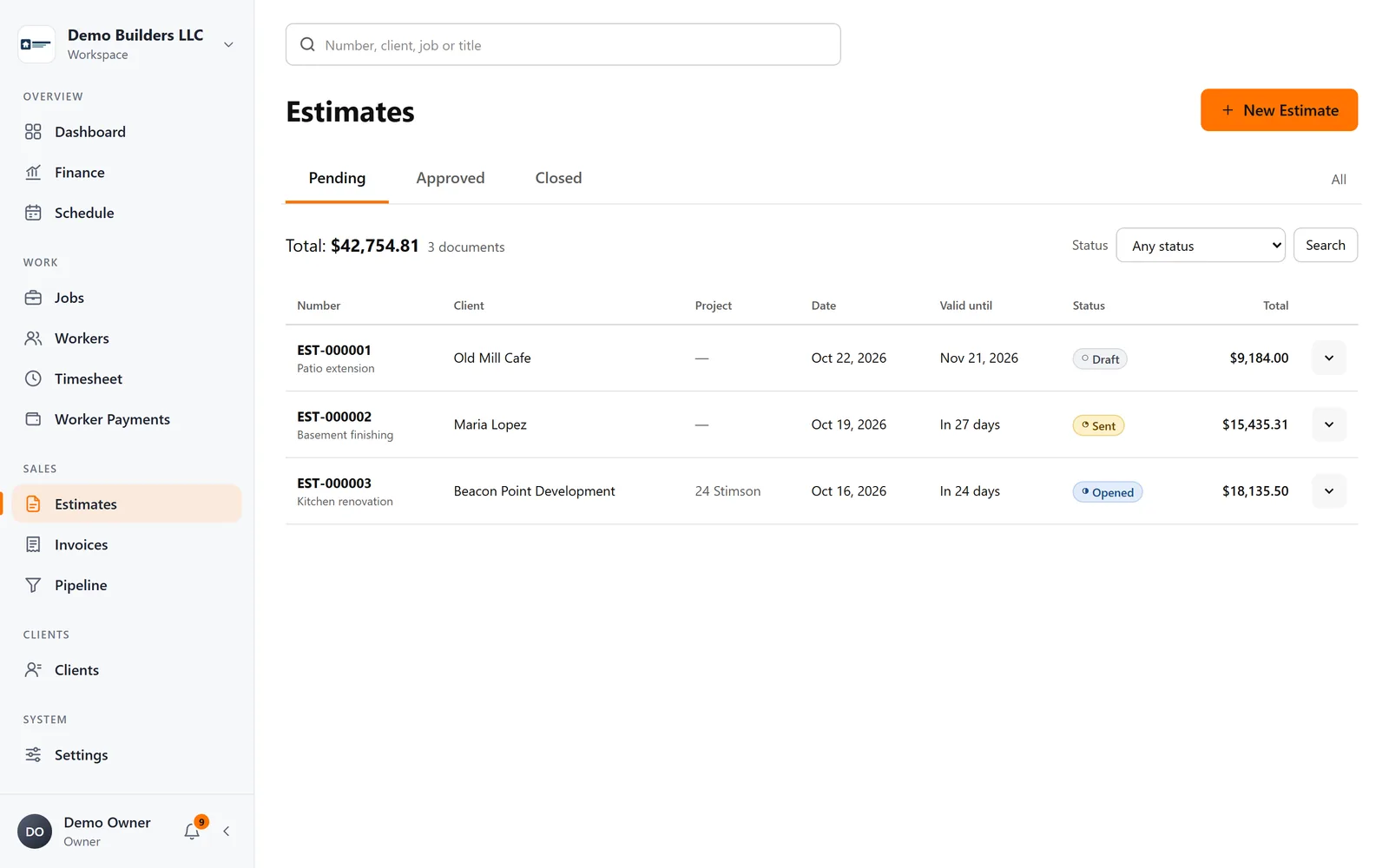
- Build documents with line items, discount, tax and attachments, in one of four PDF layouts with your branding. Your logo and company details are added automatically.
- Clients receive an email from your company name with a secure link and the PDF, and you see when they open it.
- Clients approve or decline estimates online from their phone, and an approved estimate becomes an invoice or a job in a few clicks.
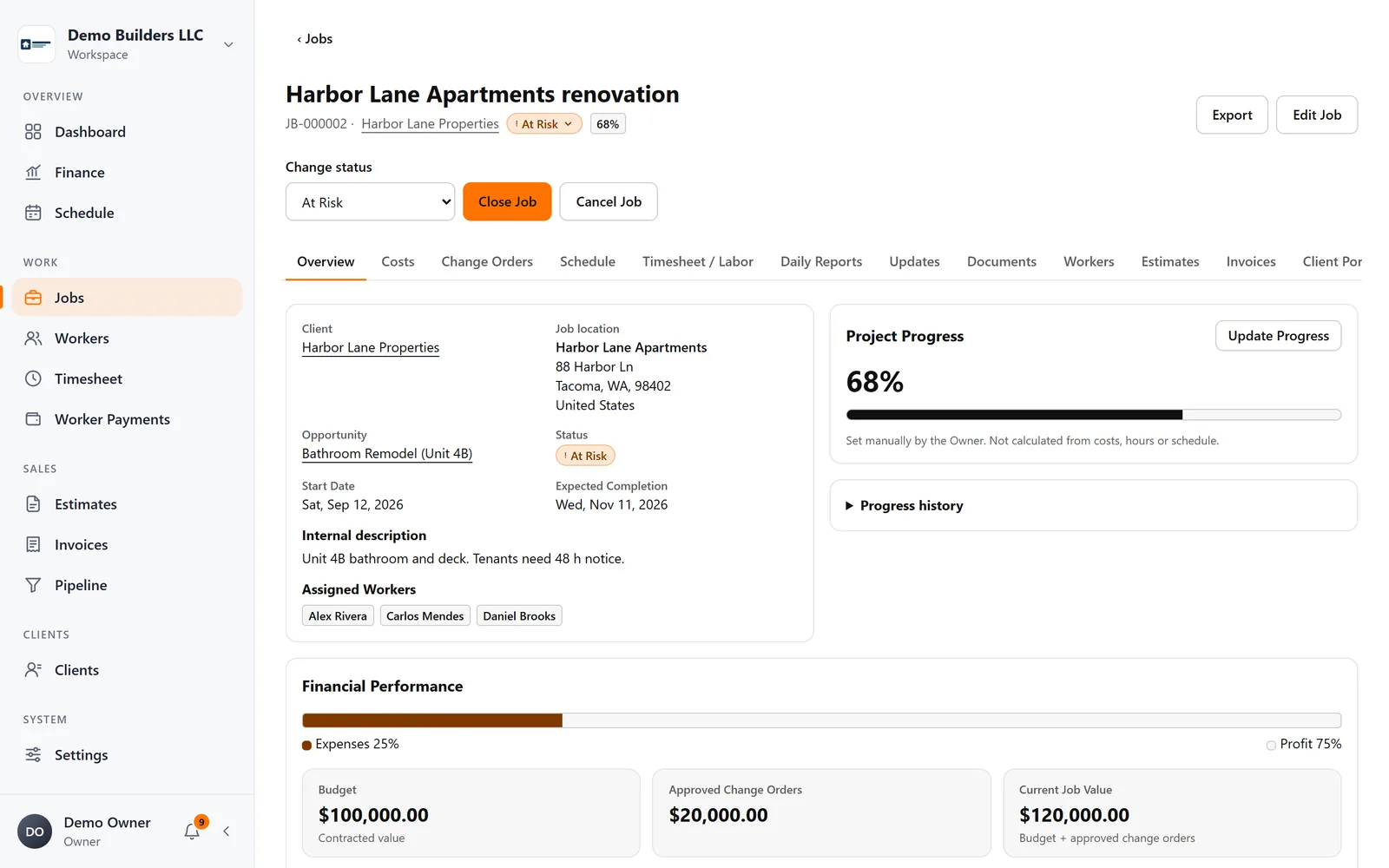
- Once the work starts, the Client Portal gives the client a secure project page with progress and the items you choose to share.
Looking professional on paper is a habit, and the right tool makes it the default. See estimates and invoices in AGT Work Crew.