After you send the estimate: how to follow up and win the job
Send it the same day, check that it was opened, follow up on a plan, revise scope before discounting and make approval easy for the client.
By AGT Work Crew Team
You spent Sunday night on the bathroom estimate for the couple in Quincy. Demo, a new tub, tile to the ceiling, a vanity they picked out at the showroom. You hit send on Monday morning and went back to work. Now it's Friday, and you have no idea if they opened it, liked it, or forwarded it to their brother-in-law who "knows a guy".
Sending the estimate feels like the finish line. It isn't. What you do in the next two weeks decides whether that number turns into a job.
Send it the same day you promised
The estimate starts working for you the moment it lands, and the clock starts at the site visit. A homeowner who met you on Tuesday still remembers your conversation on Wednesday. By the following week, your estimate is one of three, and they're comparing numbers instead of remembering why they liked you.
A few habits help:
- Give a date at the site visit, "You'll have it by Thursday", and beat it if you can.
- Write a short cover note. Two or three sentences: what the estimate covers, what you'd suggest they look at first, and that you're happy to walk through it.
- Send it as one clean document, not a photo of a handwritten page or three separate attachments.
- Say how long the price is good for, so neither of you is guessing a month later when lumber or tile prices have moved.
Know whether they actually opened it
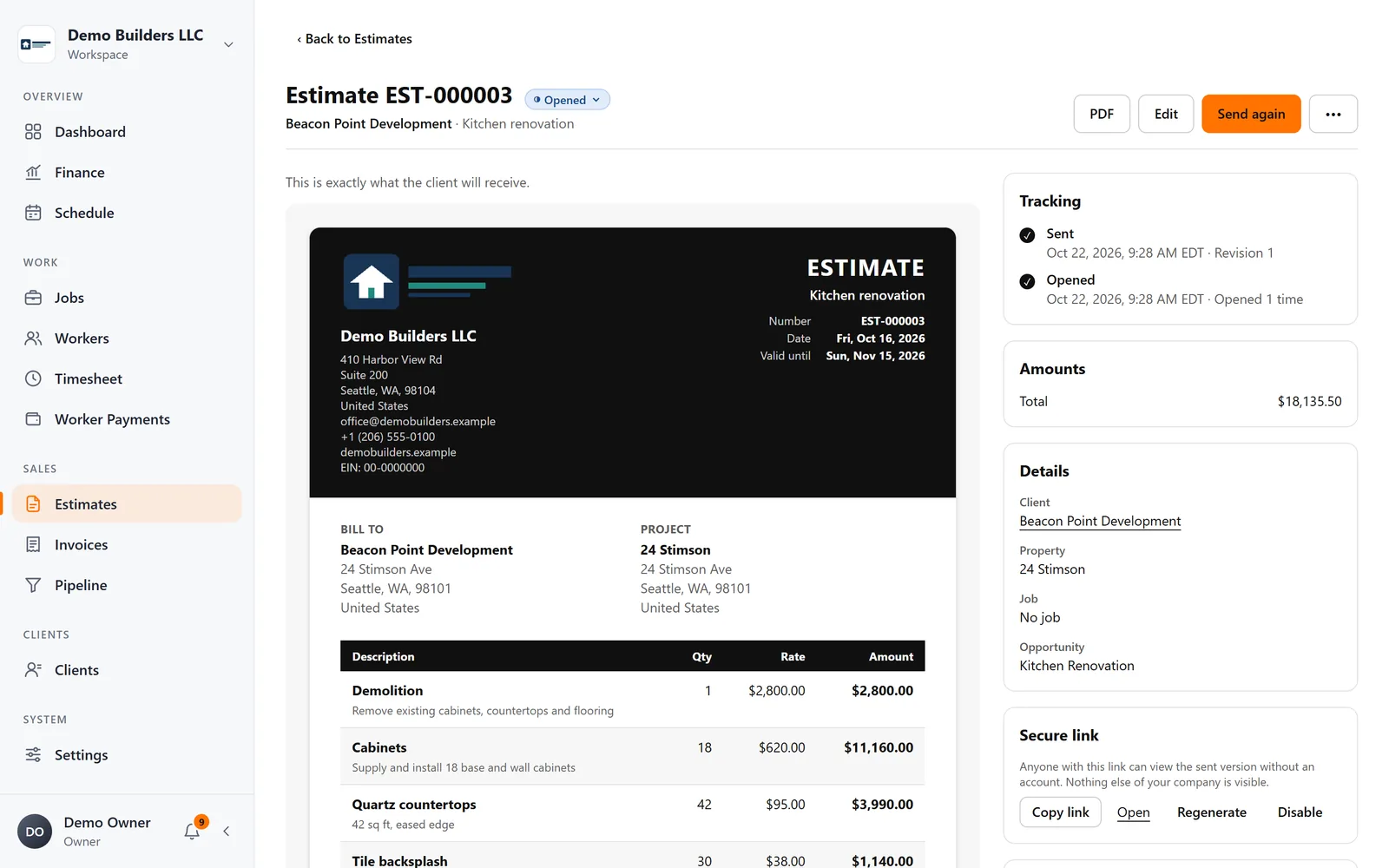
There's a big difference between "they haven't looked at it" and "they've looked at it four times". The first means your email may be buried. The second means they're interested and probably have a question, or a number from someone else.
If you can see when the estimate was opened, your follow-up gets much easier:
- Not opened after a couple of days? A short text: "Sent your estimate Monday, just making sure it didn't land in spam."
- Opened once, then silence? They may be comparing. Offer to explain any part of it.
- Opened several times? They're thinking about it seriously. This is the moment to call.
Follow up on a schedule, not on a feeling
Most estimates aren't rejected. They just drift. The homeowner meant to reply, then the kids got sick and the furnace started making noises. A follow-up plan you set ahead of time keeps you from either giving up or overdoing it:
- Two or three days after sending: check that it arrived and offer to answer questions.
- About a week after sending: a call, not a text. Ask what they think and what's holding the decision.
- Two weeks after sending: a short note that the price is still good until the date on the estimate, and that you'd like to plan the schedule.
- After that: one final check-in. If they're waiting until spring, write down the month and reach out then.
Every follow-up should give the client a reason to answer: a clear question, a date, or an option. "Any thoughts?" is easy to ignore.
Answer the questions behind the questions
When a homeowner asks "why is the tile line so high?", they're often asking something else: is this contractor padding the price, and does the other guy's lower number leave something out?
Answer plainly and point to the line items. Explain what's included that a cheaper estimate might skip, like the waterproofing behind the tile, the extra day for old plaster walls in a 1910 house, or the permit and the dumpster. You're not defending yourself. You're helping them compare apples to apples.
Revise the scope before you cut the price
When the client says the number is too high, the reflex is to knock off ten percent. Resist it. A discount tells the client your first price wasn't real, and it comes straight out of your margin.
A revision usually works better:
- Offer options: a standard vanity instead of the custom one, tile to five feet instead of the ceiling.
- Split the job into phases: the bathroom now, the hallway closet next year.
- Let them supply some materials if you're comfortable with it, with clear terms about who handles returns and damage.
Send the revised estimate as a new version so both of you can see what changed. If you do give a discount, show it as its own line, so the original value of the work stays visible.
Make saying yes easy
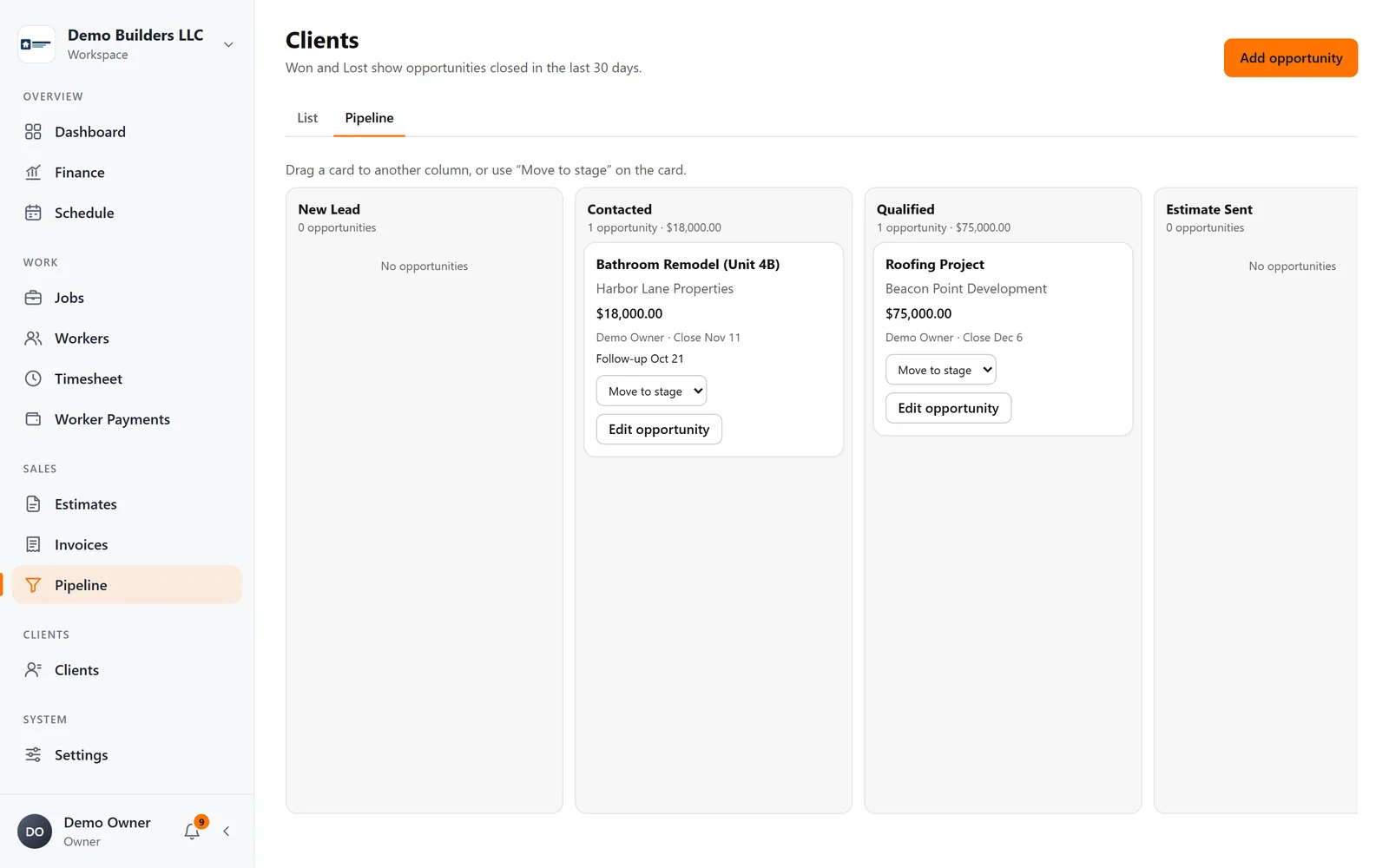
The last step is often the hardest for the client, because it's a big decision and an awkward one. Make it simple: one clear way to approve, the deposit and payment schedule already written in the estimate, and a proposed start date. When they say yes, move fast. Confirm the start, put it on the schedule, and turn the estimate into the job, so nothing gets typed twice.
And if they say no, ask why. "We went with someone cheaper" and "we decided to wait" are very different lessons.
How AGT Work Crew helps
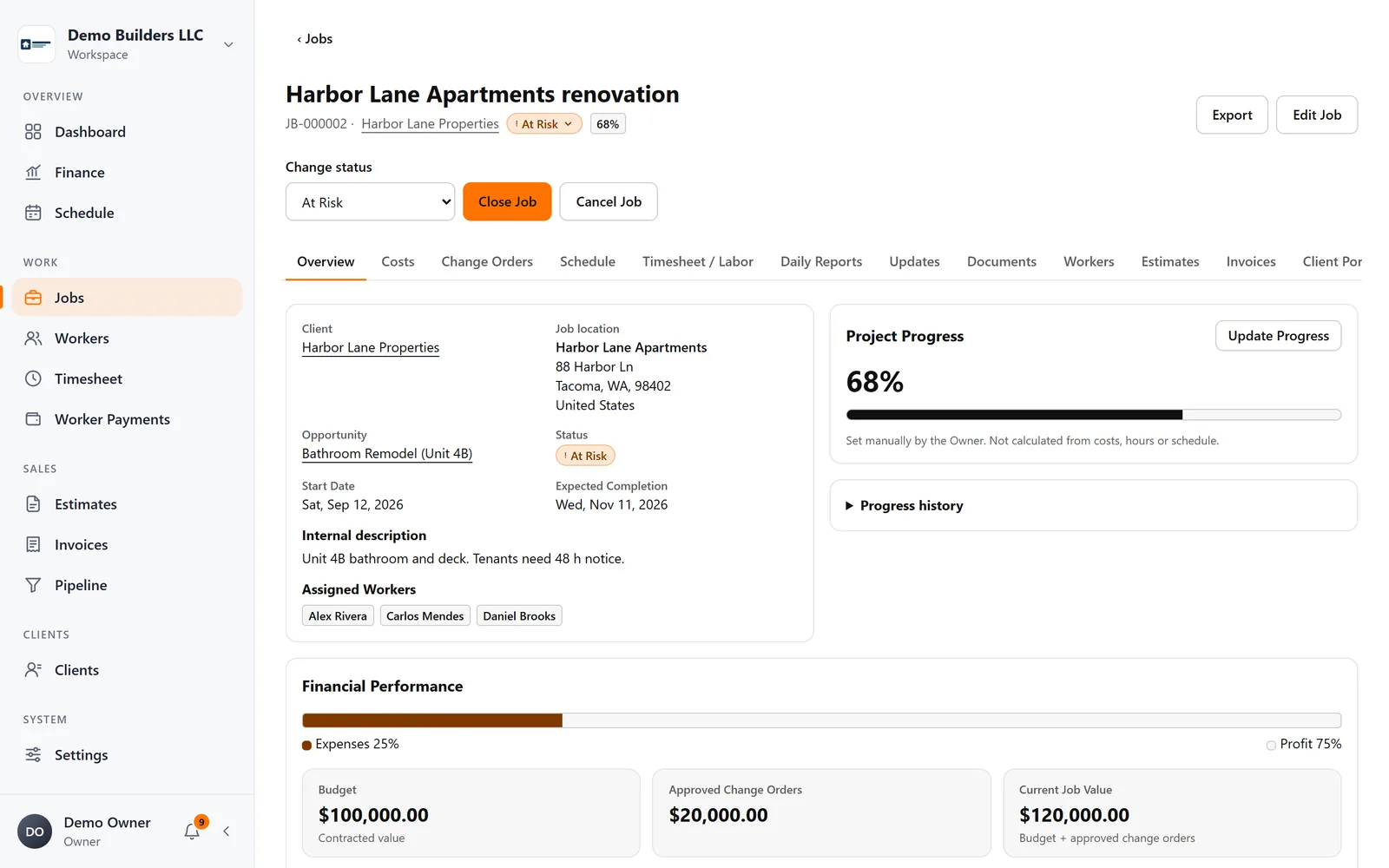
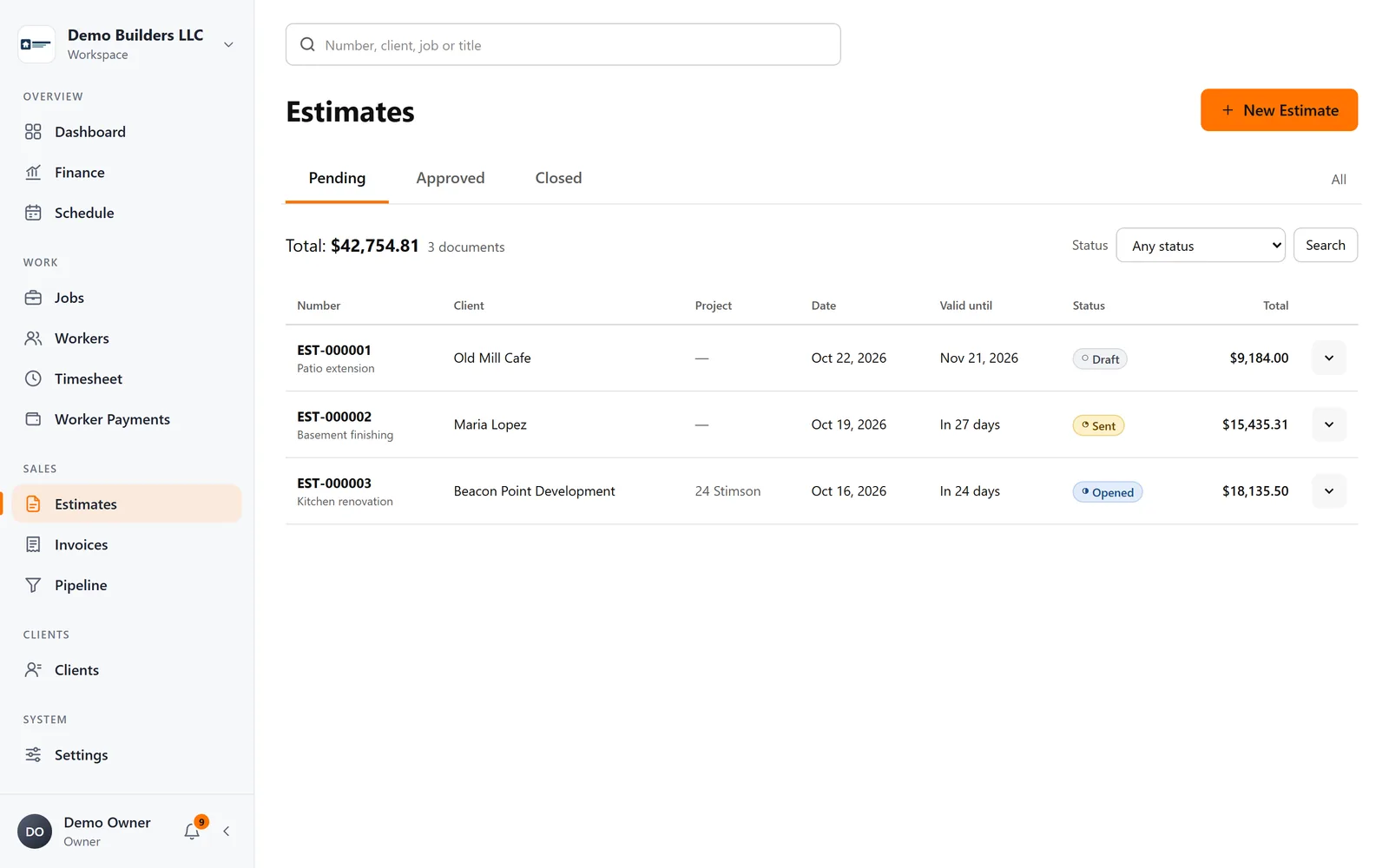
In AGT Work Crew, the work after you hit send is easier to follow.
- The client receives an email from your company name with a secure link and the PDF, and you see when they open it.
- The client approves online by typing their name, or declines with a reason, right from their phone.
- You're notified right away when they approve or decline, so you can follow up while it's fresh.
- Estimates have line items, discount and tax, with your logo and company details added automatically.
- Convert an approved estimate into an invoice, or create a job from it, in a few clicks.
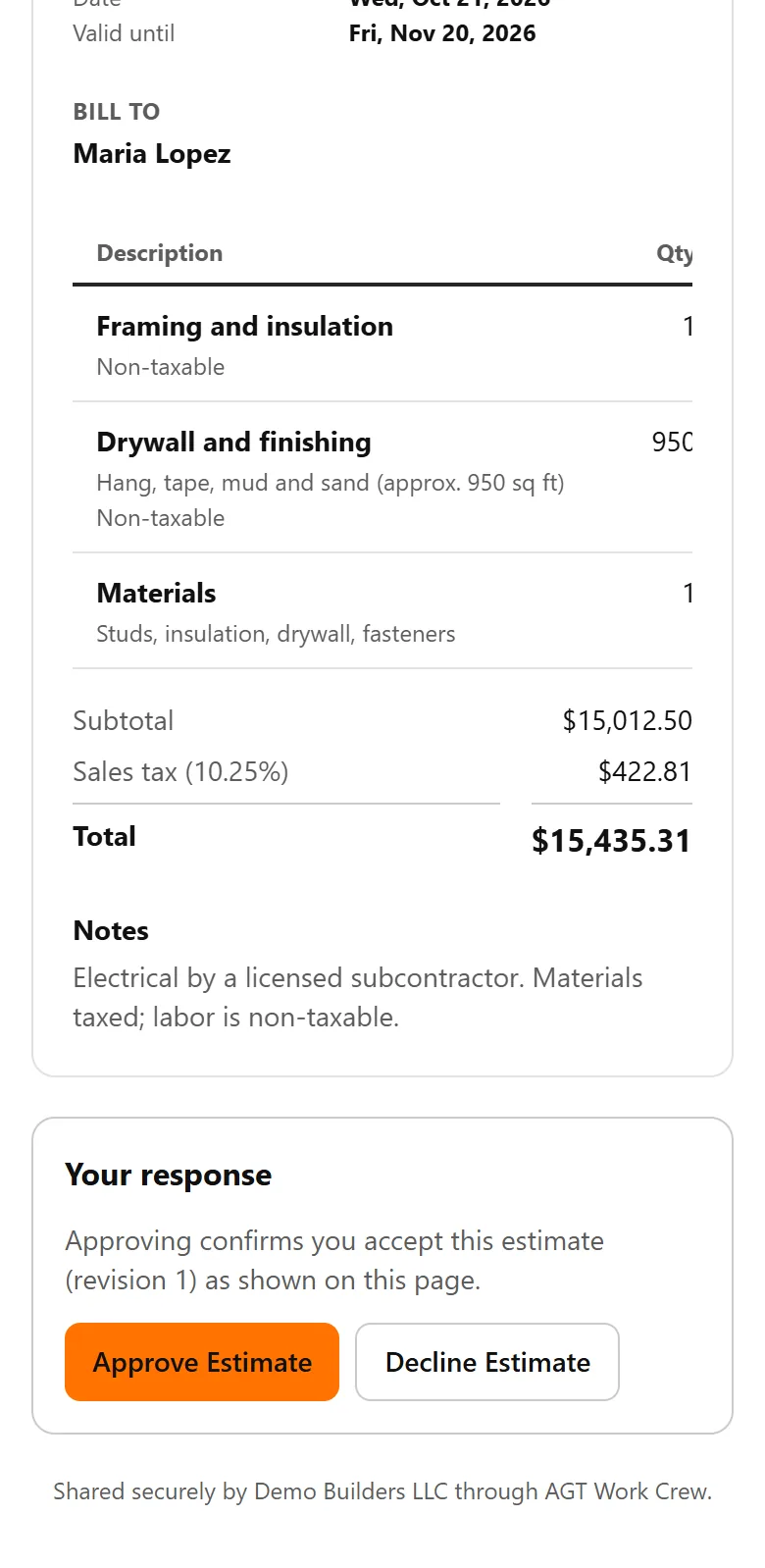
A same-day send, a planned follow-up and an easy way to say yes turn more estimates into jobs. See estimates and invoices in AGT Work Crew.