How to write a remodeling estimate clients say yes to (Massachusetts edition)
Scope, line items, allowances, payment terms and change orders: a step-by-step guide to remodeling estimates for contractors around Boston.
By AGT Work Crew Team
A homeowner in Arlington asks three contractors to price the same bathroom. One sends a number in a text message. One sends a one-line PDF: "Bathroom remodel, $28,000." The third sends a clear estimate that explains what's included, what isn't, how payments work and what happens if something changes. The third contractor usually wins the job, even when the price isn't the lowest.
A good estimate isn't paperwork. It's your first chance to show the client how you run a job.
1. Pin down the scope before you price it
Most remodeling disputes start with a scope nobody wrote down. Before you put a number on anything, walk the site and write down:
- What's being done, room by room: demolition, framing, plumbing, electrical, tile, paint, trim.
- What's not included: permits, moving appliances, repairing what you find behind the walls, haul-away. Exclusions protect you as much as inclusions.
- Who supplies what: fixtures, tile, vanity, appliances.
- Site conditions: an older home in Somerville or Brookline can hide knob-and-tube wiring, rot or lead paint. Say how you'll handle surprises.
2. Break the price into line items
One lump sum invites one question: "Why so expensive?" Line items answer it before it's asked. Group them in a way the client understands:
- Demolition and disposal
- Rough plumbing and electrical
- Framing and drywall
- Tile, flooring and finishes
- Fixtures and installation
You don't need to show your margin on every line. You need to show the client what they're paying for.
3. Use allowances for choices the client hasn't made
If the client hasn't picked the tile or the vanity, don't guess. Add an allowance: a set amount for that item, with a note that the final price adjusts to what they choose. It keeps the estimate honest and turns "you went over budget" into "you picked the more expensive tile."
4. Spell out payment terms (and know the Massachusetts rules)
In Massachusetts, residential remodeling on owner-occupied homes is covered by the Home Improvement Contractor law (M.G.L. c. 142A). A few points every remodeler around Boston should know:
- Contractors doing this work generally must be registered as a Home Improvement Contractor.
- Work over $1,000 needs a written contract with specific information, including a payment schedule.
- An up-front deposit generally can't exceed one-third of the total contract price, or the actual cost of special-order materials, whichever is greater.
- Work can't begin until the contract is signed and the homeowner has a copy.
Your estimate isn't the contract, but it should line up with it. Put the deposit and the progress payments in the estimate so there are no surprises when the contract arrives.
This article is general information, not legal advice. Check the current requirements with the Massachusetts Office of Consumer Affairs and Business Regulation (mass.gov) or your attorney.
5. Decide now how changes will work
Every remodel changes. The client moves the outlet, upgrades the shower valve, finds a "while you're here" project. Say in the estimate that changes are priced as change orders, approved in writing before the work is done. Clients accept change orders much more easily when they were told about them on day one.
6. Make it easy to say yes
Send the estimate quickly, while the client is still excited about the project. Make it look professional, with your logo and company details. And make approving it a two-minute task, not a print-sign-scan-email chore. Then follow up: an estimate nobody opened is not the same as an estimate the client is thinking about.
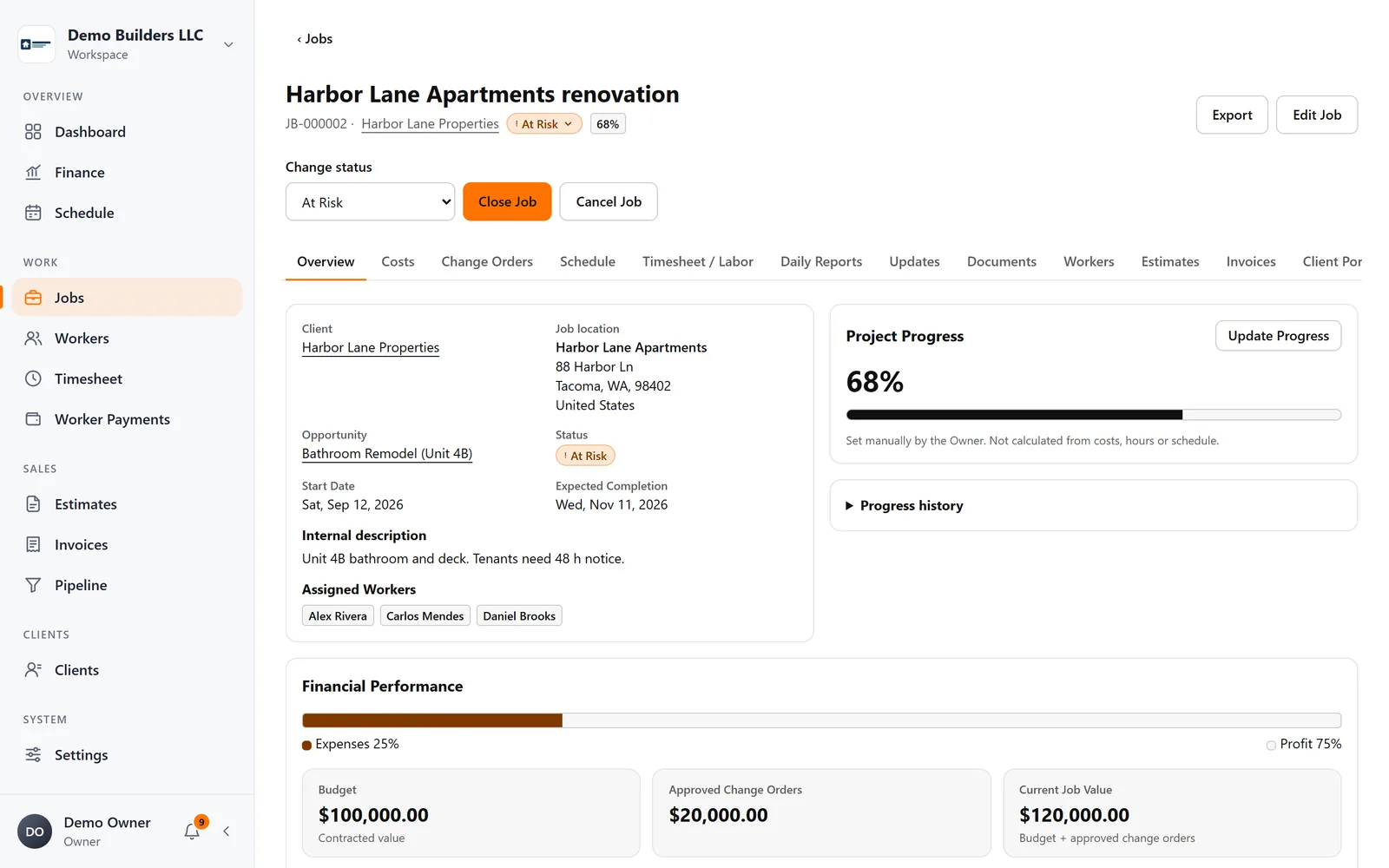
How AGT Work Crew helps
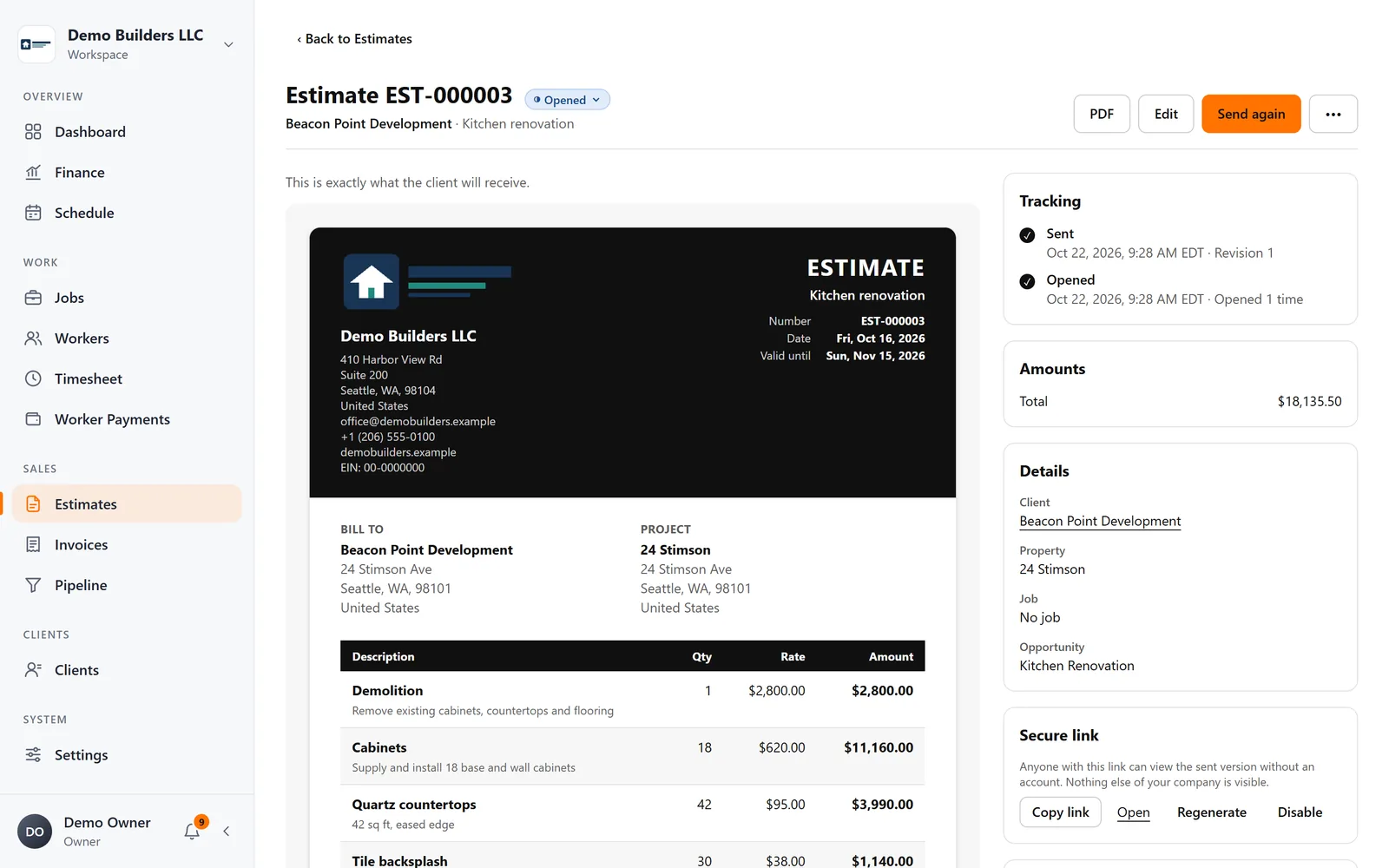
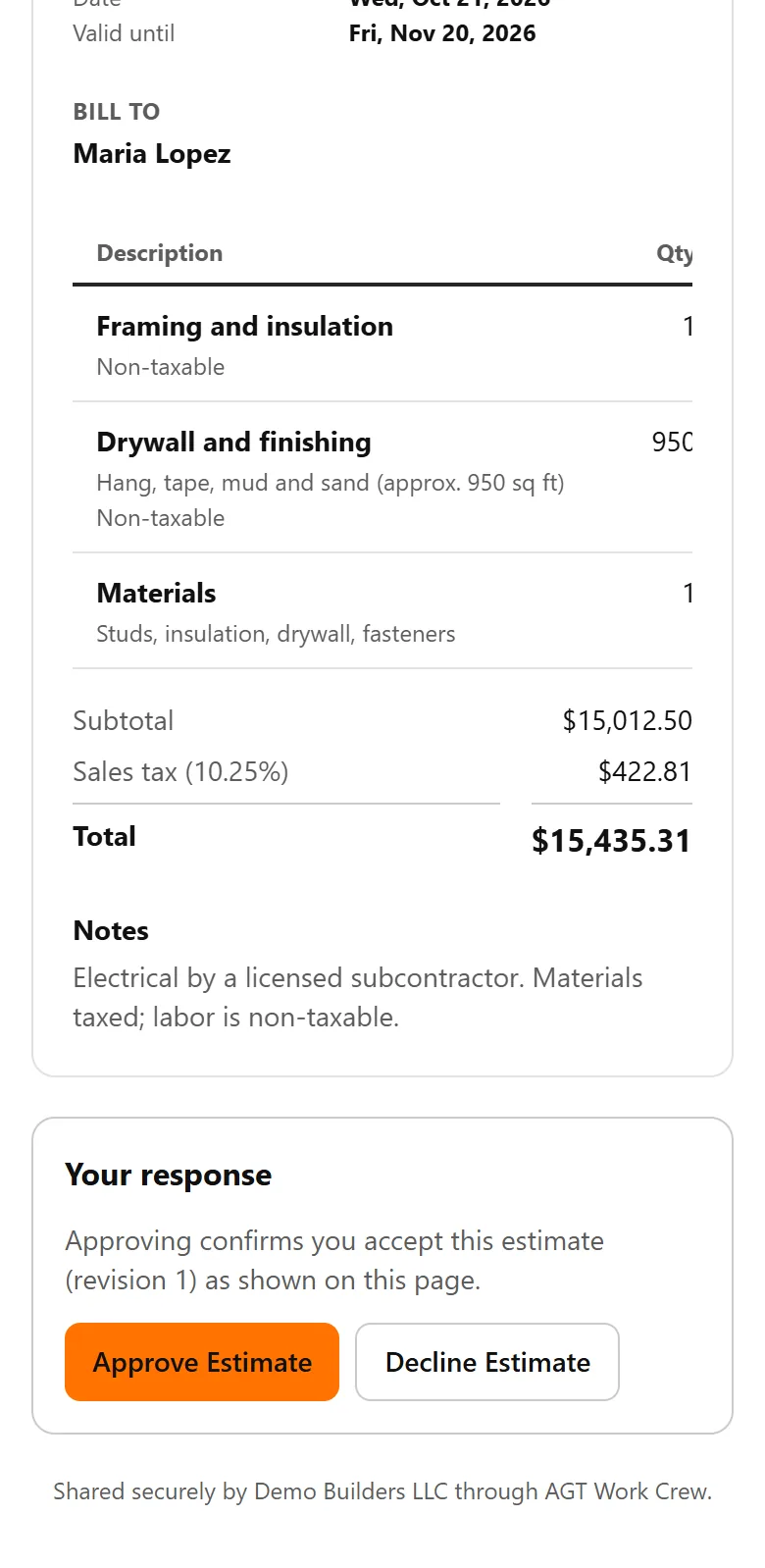
In AGT Work Crew, you build estimates with line items, discount, tax and attachments, in one of four layouts with your logo and company details added automatically.
- The client receives an email from your company name with a secure link and the PDF, and you see when they open it.
- The client approves online by typing their name, or declines with a reason, from their phone. The approval, name, time and revision are recorded, and you're notified right away.
- An approved estimate becomes an invoice or a job in a few clicks, and change orders are tracked on the job: only approved ones add to the job's value.
A clear estimate wins more jobs and starts every project on the right foot. See estimates and invoices in AGT Work Crew.