Job-site photos that protect you: what to shoot and when
What to photograph before demo, behind walls, at delivery and at the end of the day, plus captions and when to share photos with clients.
By AGT Work Crew Team
Eight months after you finished a kitchen in Arlington, the homeowner calls. There's a water stain on the dining room ceiling, right under the new sink, and they want to know what your plumber did. You're fairly sure the drain was fine when the wall was closed. Fairly sure. Somewhere on a phone that belonged to a worker who has since moved on, there might be a photo that settles it.
Most contractors take plenty of photos. The trouble is that they're the wrong photos, taken at the wrong moment, with no note about what they show, and scattered across five phones.
Why photos matter more than you think
A good photo record does three jobs at once:
- It settles disagreements quickly. "It was already cracked when we got here" is a debate. A dated photo of the crack is not.
- It shows the client the work they'll never see again. Blocking, insulation, a new beam, waterproofing behind the tile: all of it disappears behind drywall.
- It helps your own crew later. When you come back to the same house to finish the basement, knowing where the wires and pipes run saves hours.
In New England, where so much of the work happens inside old houses with surprises in every wall, that record is worth a few minutes a day.
What to photograph, and when
The moment matters as much as the picture. These are the photos that pay off most often:
Before you touch anything
Walk the work area before demo and photograph every wall, floor, ceiling, window and fixture in it, plus the path your crew will use to get there. Existing cracks in plaster, scratched hardwood in the hallway, a loose railing on the porch: if it's in the photo before you start, nobody can say you caused it.
Behind the walls, before they close
This is the photo set people regret not taking. Before insulation, drywall or tile goes up, photograph every open wall and ceiling: plumbing, wiring, blocking, framing repairs, any old knob-and-tube you found in that 1920s Somerville two-family. Step back for a wide shot that shows the whole wall, then move in for the details. Put a tape measure in the frame when locations matter.
Deliveries and damage
When materials arrive, photograph them before they're signed for: the cabinet boxes, the tile pallets, the window labels. If something shows up damaged or wrong, a photo taken in the driveway makes the conversation with the supplier much shorter.
Progress from the same angles
Pick two or three spots in each room and shoot from the same place every time, ideally from the doorway. A series of photos from the same angle tells the story of the job far better than a random collection, and it's exactly what a homeowner wants to see.
End of the day
Before the crew leaves, take a quick look at the site the way the client will see it tonight: covered openings, a clean floor, tools put away, plastic up against the dust. One or two photos of a tidy site at 4:30 on a January afternoon are good for the relationship.
Captions make photos useful
A photo without a caption is a puzzle six months later. Every photo worth keeping deserves a short note that answers two questions: what it shows and where it is.
- Weak: "kitchen wall"
- Better: "North kitchen wall, left of the window. New drain and vent before insulation."
That takes ten seconds on site, while the person holding the phone still knows exactly what they're looking at. Nobody will remember it later.
Organize photos by job, not by phone
Photos only protect you if you can find them. The common failure is simple: every worker has a camera roll full of pictures from six jobs, mixed with their kids' birthdays.
A few habits fix it:
- One home for each job's photos. Everything for the Wilson bathroom lives in one place, not on whoever's phone was handy.
- Photos travel with a date and a short report. "Tuesday: framing inspection passed, started rough electrical" plus the photos is a record. A pile of loose images is not.
- Send them the same day. Photos that sit on a phone for a week tend to never get sent at all.
- Keep them after the job. Warranty calls and repeat clients come back years later.
When to share photos with the client
Not every photo belongs in the client's inbox. A picture of a rotted sill plate you just found can cause panic if it arrives without context.
Share the photos that tell the story, and share them with an explanation. Keep the rest on the job, where your team can find them.
Good moments to share: the open walls before they close, a milestone reached, the finished space. When you do find bad news behind the plaster, call first, then send the photos with a short note and your plan. That turns a scary discovery into a problem you're already handling.
How AGT Work Crew helps
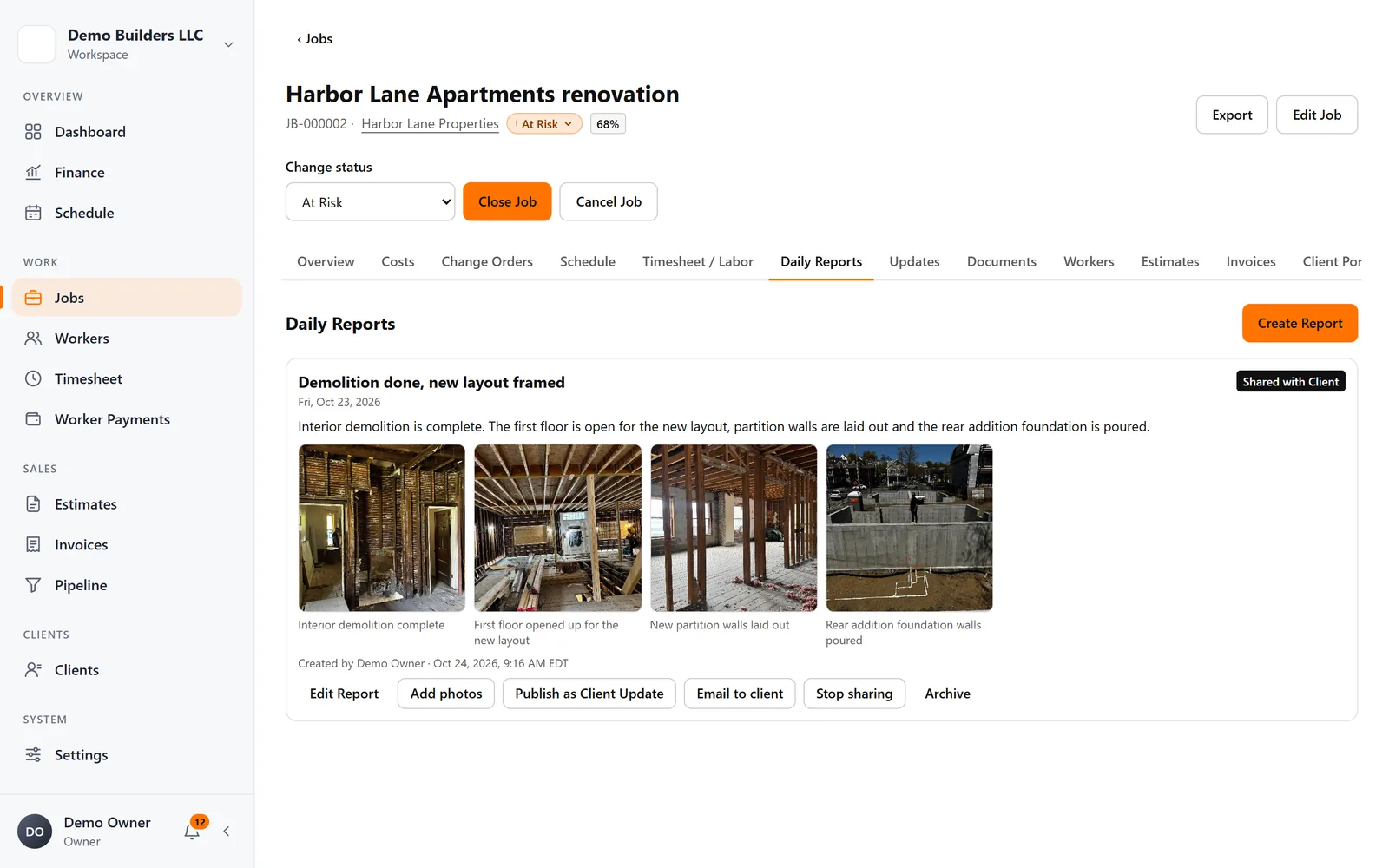
Daily reports in AGT Work Crew keep job photos where they belong, with the job:
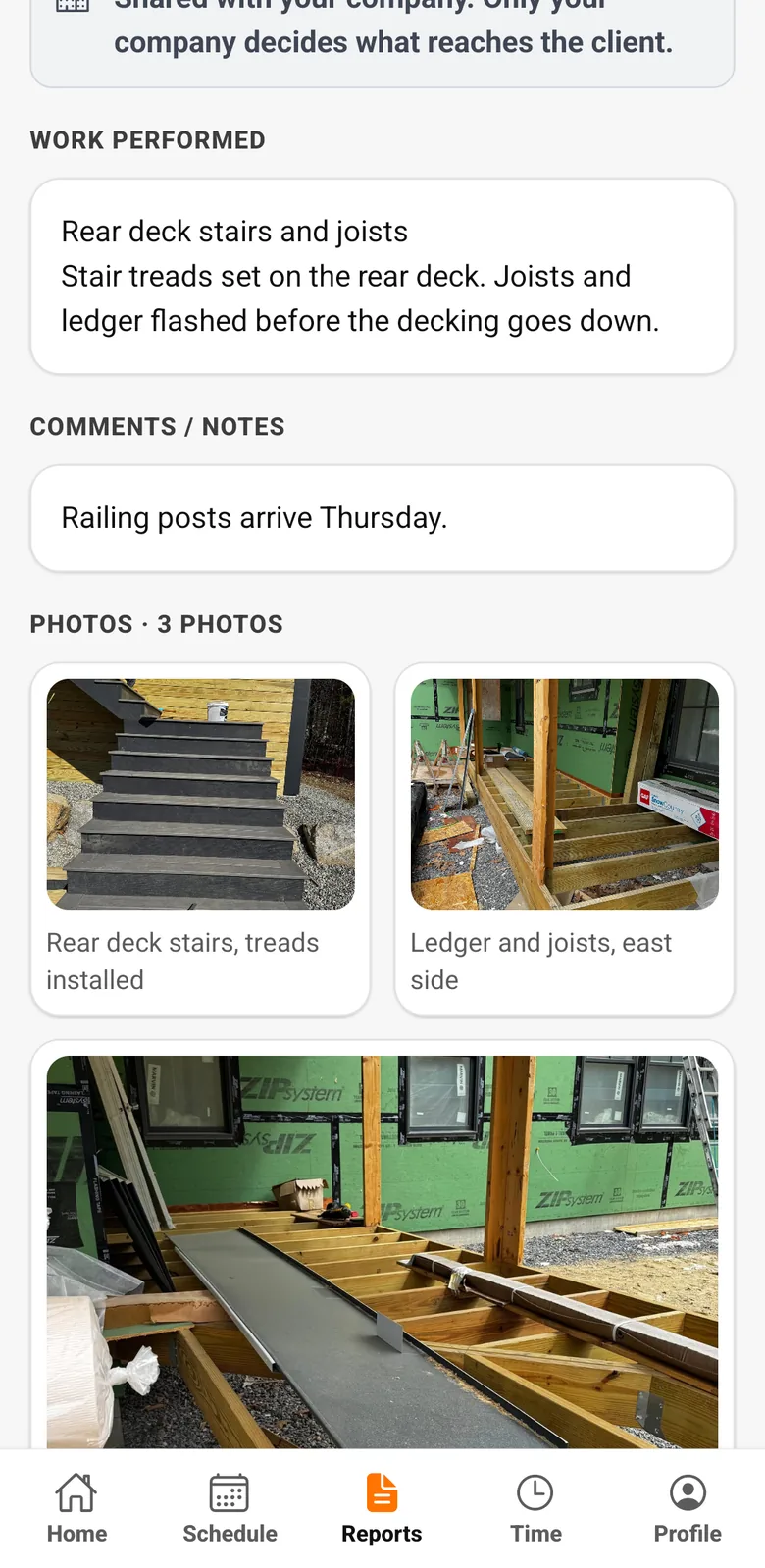
- Workers write a report in the app, add photos with captions and submit it. You're notified when it arrives.
- Drafts work offline, so a basement with no signal isn't a problem. The report is submitted when the connection returns.
- Reports and photos are stored with the job and private by default.
- When you choose, share a report with the client in the Client Portal, or email it with photo thumbnails.
- Internal notes are never shared with the client.
The right photos, taken at the right moment and kept with the job, turn "I'm fairly sure" into an answer. See how daily reports work.