Getting paid on time: invoices, due dates and follow-up without awkward calls
Why contractor invoices get paid late, how to set terms and write invoices clients pay, and a simple follow-up routine.
By AGT Work Crew Team
The deck in Melrose is finished, the client loved it and the final invoice went out three weeks ago. Since then: nothing. You don't want to sound desperate, the client is a nice person and maybe a neighbor's next job depends on them. So you wait, and meanwhile you've already paid for the lumber, the crew and the dumpster. Every small contractor around Boston has carried a client's balance on their own credit card at some point.
Late payment is rarely about bad clients. Most of the time it comes from unclear invoices, vague terms and follow-up that never happens.
Why invoices get paid late
Before you blame the client, look at the invoice itself. The usual reasons a payment slips:
- The invoice went out late. If you bill two weeks after the work is done, you've already added two weeks to the wait.
- There's no due date. "Payment due upon receipt" sounds firm, but without a real date nobody feels late.
- The client doesn't understand it. One line that says "Balance, $14,500" invites questions, and questions turn into delays.
- Nobody follows up. Many unpaid invoices aren't disputed. They're simply forgotten in a busy inbox.
All four are within your control.
Set the terms before the work starts
The easiest collection call is the one you never have to make. Payment terms belong in the estimate and the contract, not in an awkward conversation at the end:
- Agree on a payment schedule up front: a deposit, progress payments tied to clear milestones, and a final payment at completion.
- Tie milestones to things the client can see: "rough plumbing passed inspection" or "cabinets installed", not "week three".
- Say how you accept payment (check, bank transfer, whatever you use) so nobody has to ask.
- Say what happens with changes: extra work is priced and approved as a change order, and billed on the next invoice.
When the client already agreed to the schedule, sending the invoice is just doing what you both said you'd do.
Write an invoice that's easy to pay
A good invoice answers every question before the client has to call you:
- A clear invoice number and date. It makes the payment easy to match later, on both sides.
- A real due date. "Due November 20" works better than "Net 15", because nobody has to count.
- What this invoice covers. "Progress payment 2 of 3: framing and rough electrical complete" ties the amount to the work.
- What's been paid and what's left. Show earlier payments and the remaining balance on the job.
- Approved change orders as separate lines, so the client recognizes each one.
- Your company details and logo. A professional invoice gets taken more seriously than a number in a text message.
Then send it the day the milestone is reached, while the client can still see the new cabinets or the finished roof.
Follow up without the awkward call
Following up is part of the job, not a personal favor you're asking for. A simple routine takes the emotion out of it:
- A few days before the due date: a short, friendly reminder with the invoice attached. Many clients pay right then.
- On the due date: a polite note that the invoice is due today.
- A week late: a direct message. Ask if anything about the invoice is unclear and when you can expect payment.
- Two weeks or more: pick up the phone. By now it's a business conversation, and you have a written record behind you.
Knowing whether the client actually opened your email changes the tone. "Did you get my invoice?" is a different question when you already know they looked at it twice.
Keep every message short, factual and polite. You may want to work with this client again, and their neighbors are watching your truck in the driveway.
Watch the whole picture, not one invoice at a time
When you run several jobs from Worcester to the North Shore, it's easy to lose track of who owes what. Once a week, look at all your open invoices together: what's due, what's overdue, and how long each balance has been waiting. The oldest balances are the hardest to collect, so they go first. Slow winters in New England are a lot easier to get through when the money from the fall was actually collected.
How AGT Work Crew helps
In AGT Work Crew, an approved estimate becomes an invoice in a few clicks, with your logo and company details added automatically.
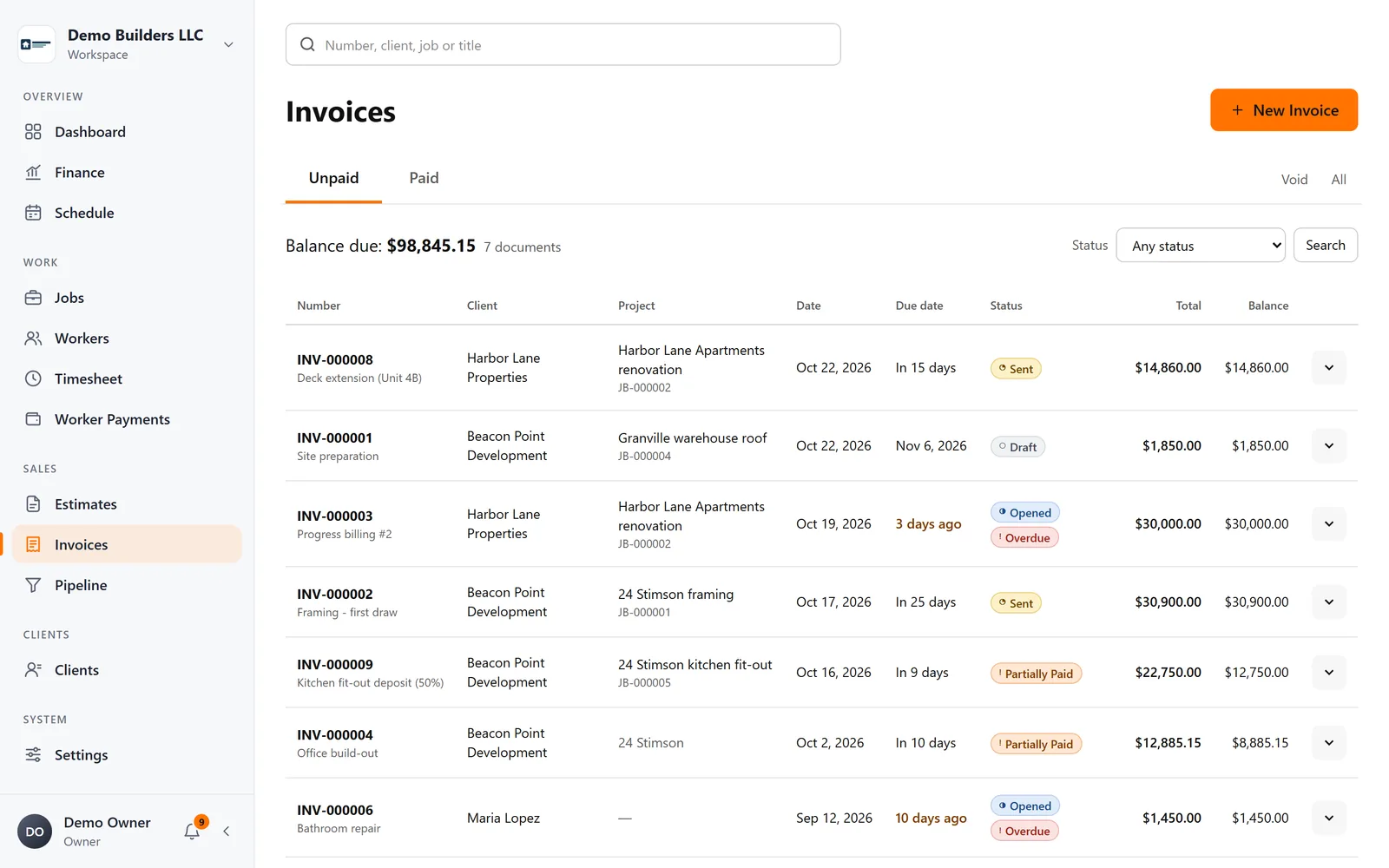
- Every invoice has a due date, and invoices that pass it show as overdue, so you know who to follow up with.
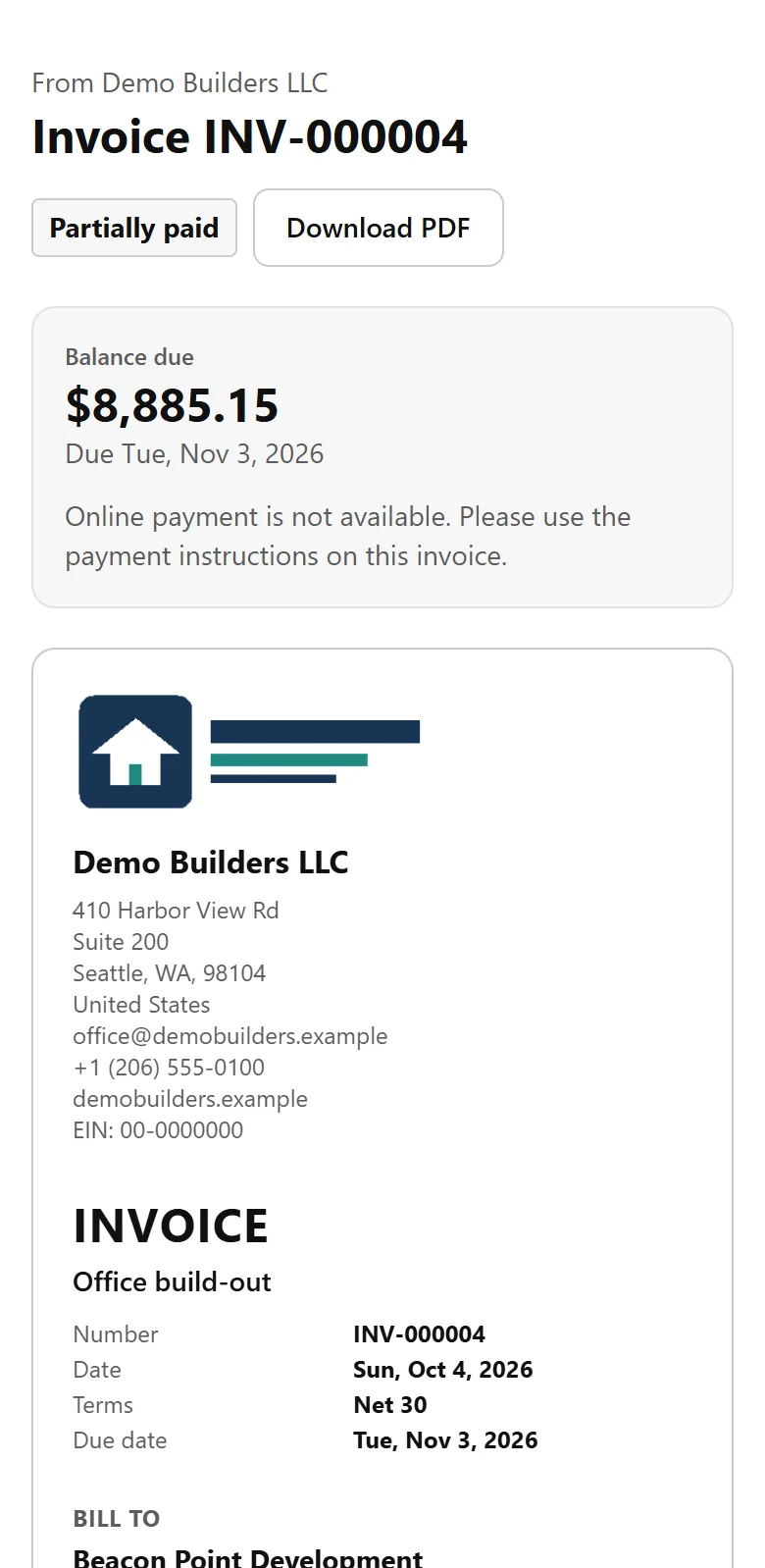
- The client receives an email from your company name with a secure link and the PDF, and you see when they open it.
- The client views and downloads the invoice from that secure link on any device.
- You record partial and full payments as they come in, and the balance updates.
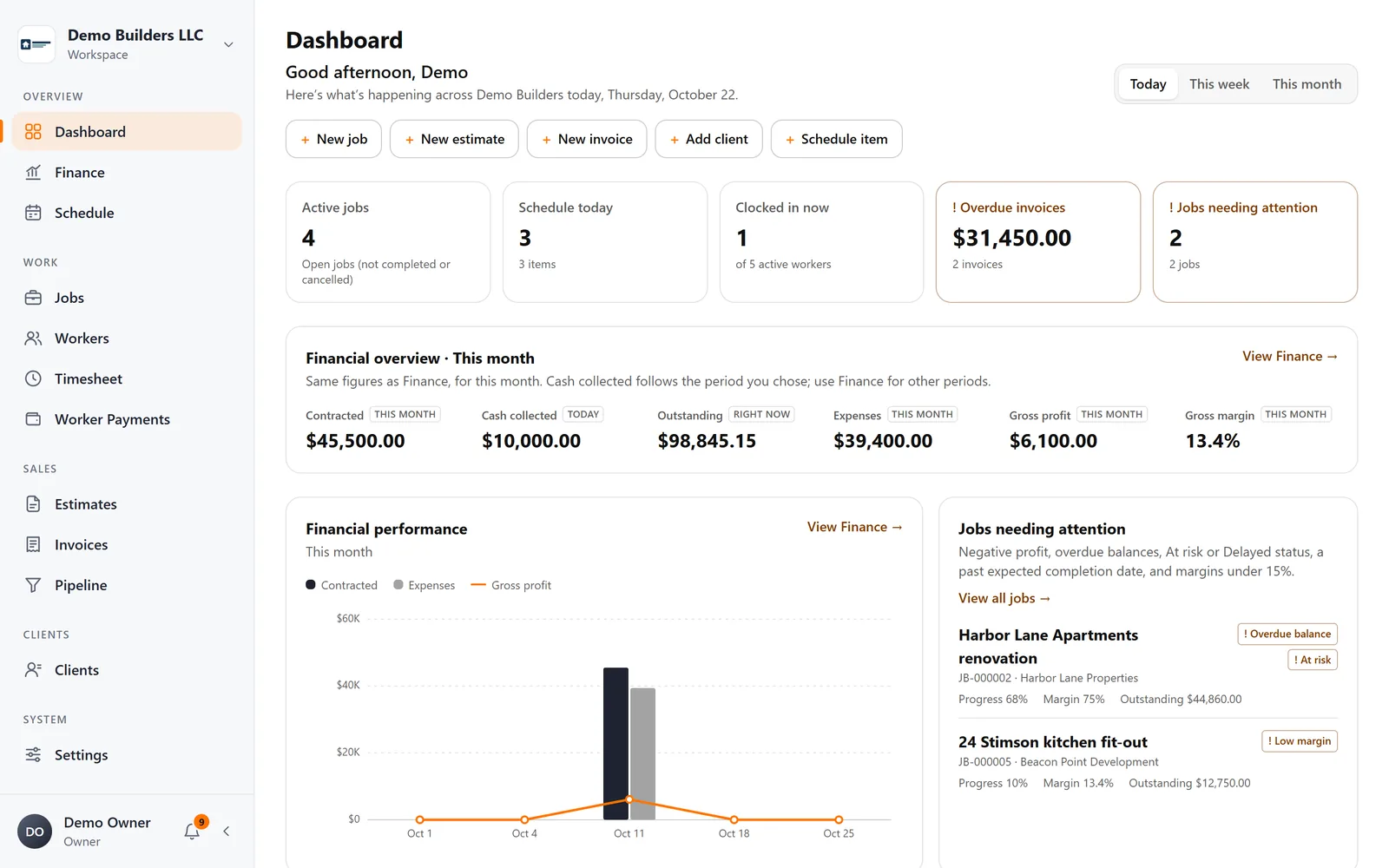
- The Finance dashboard shows invoice status and receivables aging, so you can see what to collect first.
Clear invoices, real due dates and a steady follow-up routine get you paid sooner without the awkward calls. See estimates and invoices in AGT Work Crew.